


Certificate of Formation
File a certificate of formation with the Secretary of State in order to create a limited liability company.
Select a state


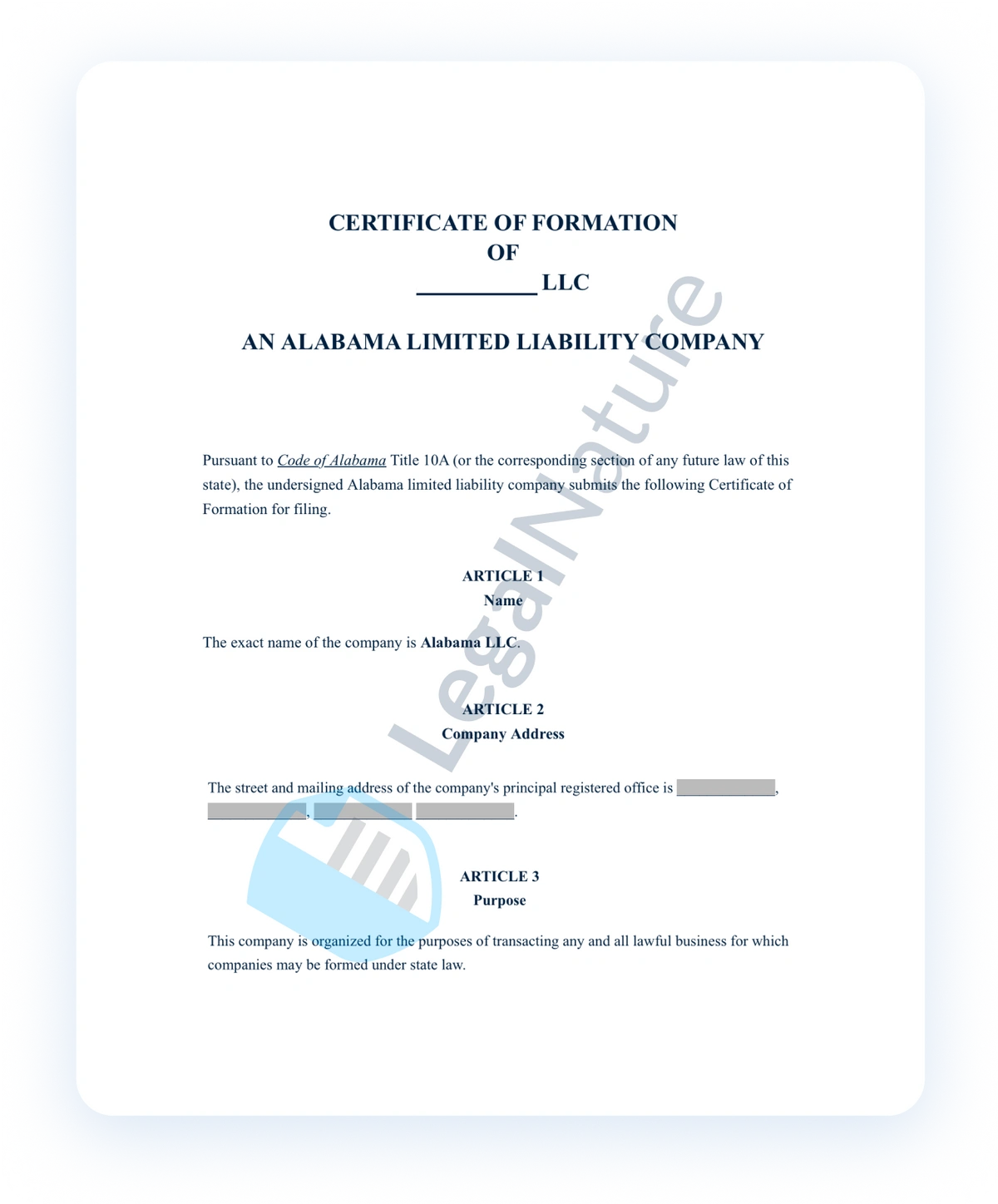
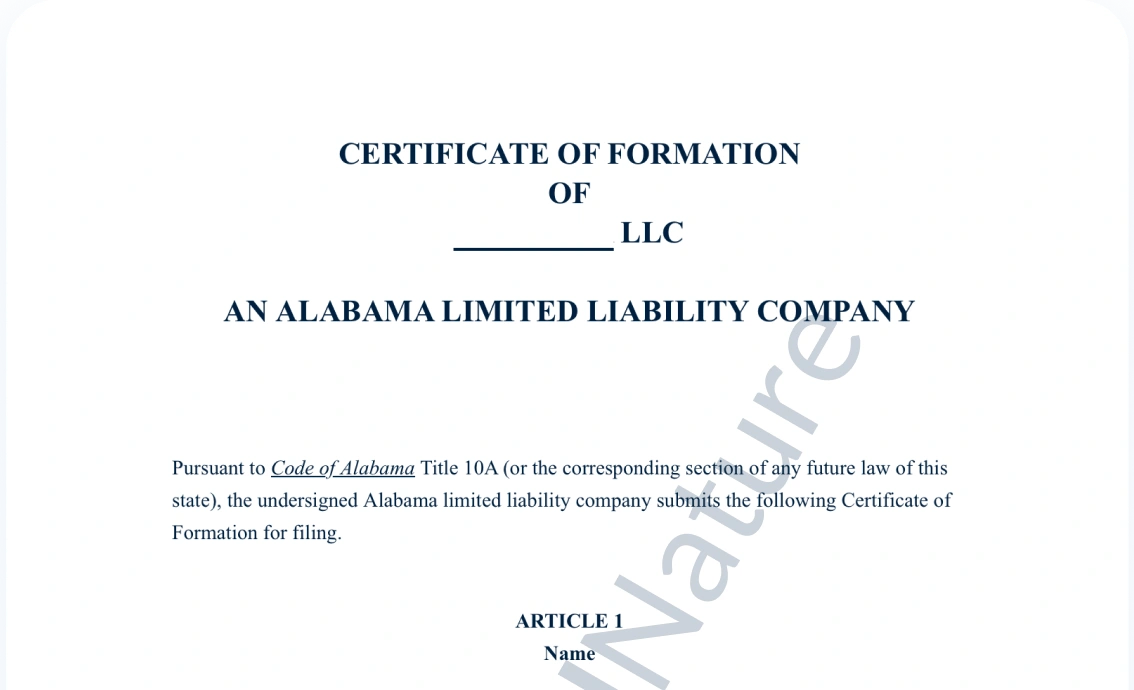
What is a certificate of formation?
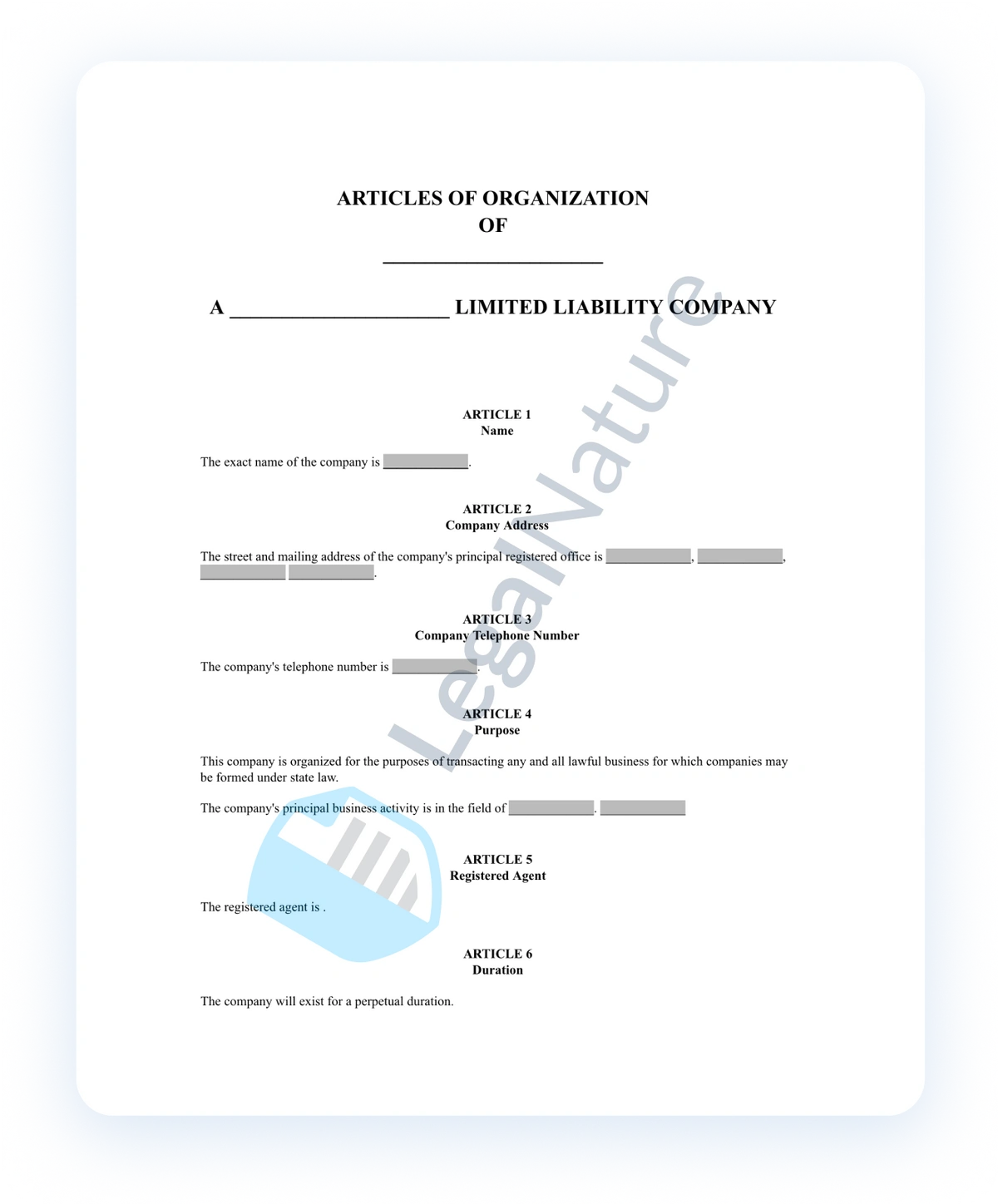
A certificate of formation is the legal document filed with a state to establish a limited liability company within that state. Some states refer to a certificate of formation as "articles of organization" or a "certificate of organization." These public records outline the fundamental aspects of a limited liability company, or LLC, including the following:
- Company name
- Business address
- Founding members
- Business purpose
- Registered agent
- Effective start date
- Duration of the LLC
Filing a certificate of formation with a state is a crucial step in establishing the legal protections and benefits associated with a limited liability company.
Use the business formation document that best suits your needs
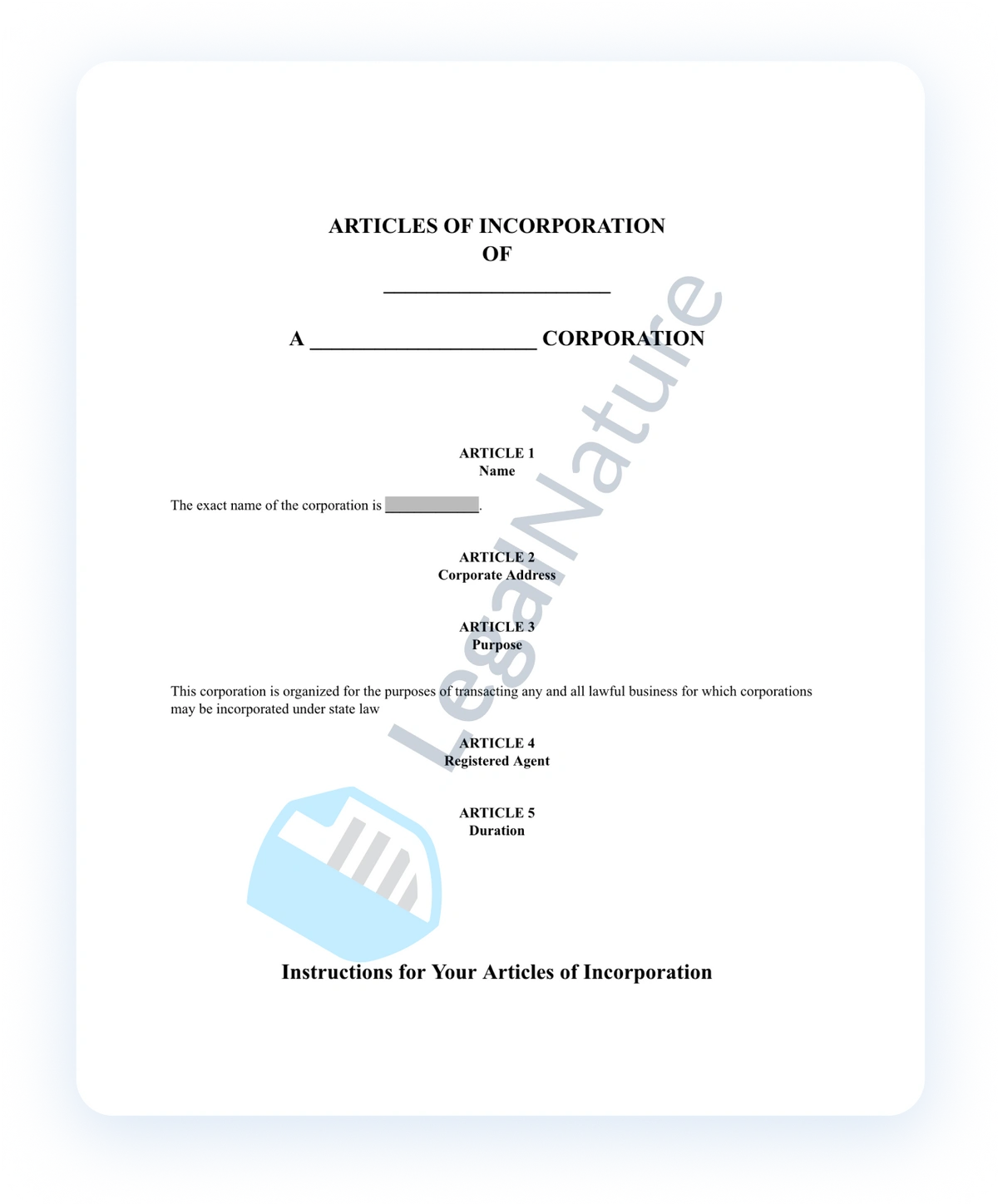
Articles of Incorporation Articles of incorporation are filed with a state to establish a corporation. A corporation is a business organization that offers liability and tax protections similar to that of an LLC but has a different ownership and management structure.
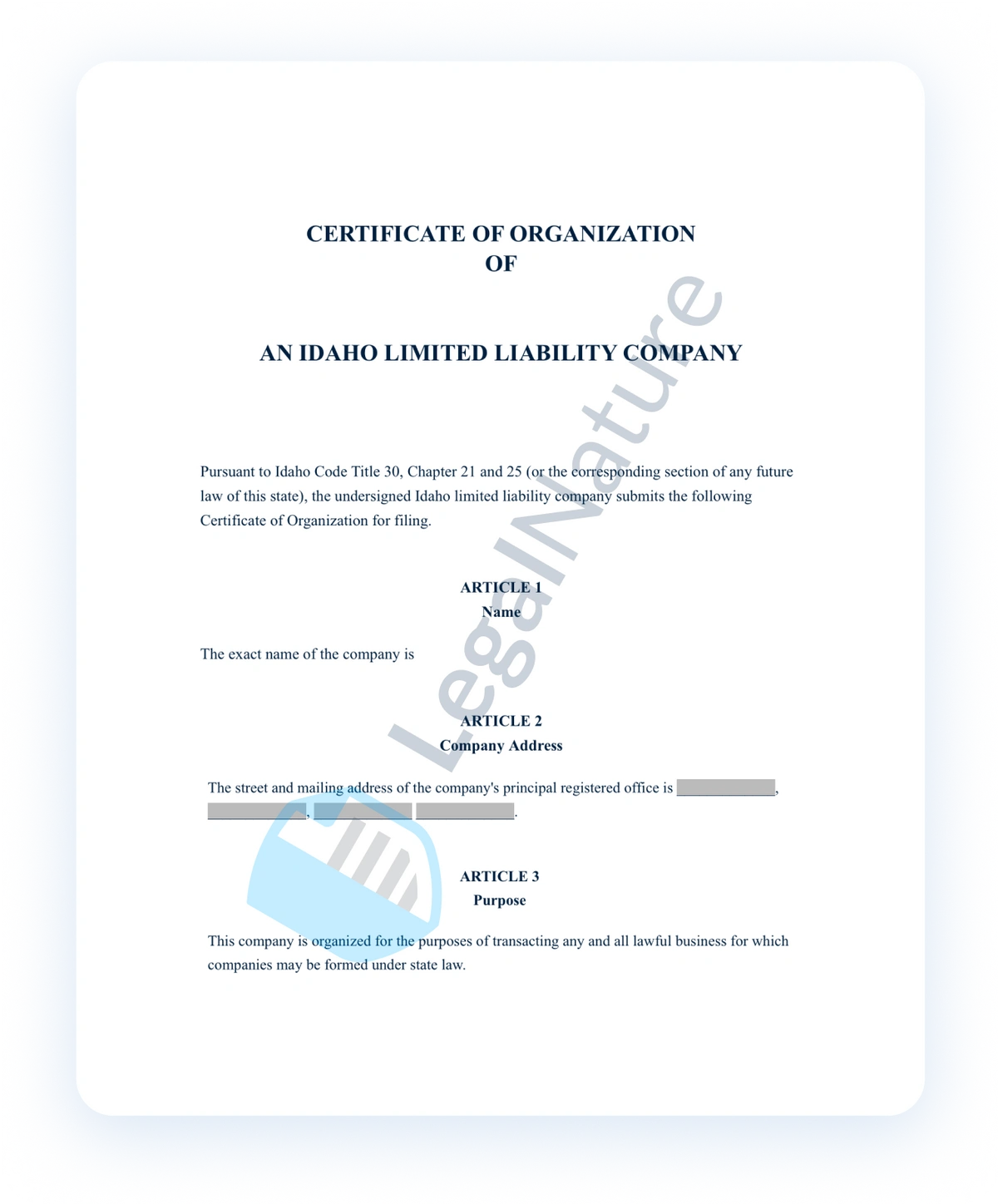
Certificate of Organization Some states refer to a certificate of formation as a certificate of organization. LegalNature's intuitive online forms will create the correct document based upon your chosen state's requirements.
Articles of Amendment Sometimes information on a certificate of formation needs to be changed (e.g. change of company name or address). Articles of amendment are filed with the LLC's state in order to submit amendments to certificates of formation.
Create a certificate of formation in your state
When to use a certificate of formation
A certificate of formation is an essential legal document used to establish a limited liability company (LLC) at the state level. You should use a certificate of organization to do the following:
- Form a new LLC: This document officially creates your company as a distinct legal entity, separate from its owners.
- Register with the state: A certificate of formation is required to register your LLC with the state government.
- Define company structure: Outline the basic structure and purpose of your LLC.
- Protect personal assets: By establishing an LLC, you can shield personal assets from business liabilities.
- Seek tax advantages: LLCs offer potential tax benefits, which begin with proper formation.
- Comply with state laws: Each state has specific requirements for LLC formation, which a certificate of formation will help fulfill.
- Create a foundation for business operations: This document serves as the legal and structural backbone of your company.
How to create your certificate of formation
Select the state where the LLC will be registered
Our LLC certificate of formation template dynamically changes according to the selected state's requirements. Since each state decides what details will be necessary to form an LLC, the required information can vary from one state to another.
Provide the LLC's name, company address, and other details
When choosing your LLC's name, it is important to consider your state's naming requirements. As for your LLC's company address, keep in mind that it will function as an official business address. For this reason, a street address will most likely be required.
Describe the LLC's management structure
Oftentimes an LLC will be managed either by a specific person who has been given the title of "manager" or by the LLC's members. If a manager is named, then that person will be authorized to handle the day-to-day activities of the LLC. On the other hand, if the members manage the LLC, each one will have the right to make management decisions.
Why create a certificate of formation and an LLC?
An LLC is a business entity formed separately from the owner that can be used to incur business debts, expenses, and tax liabilities related to the business.
The LLC structure creates a legal separation between the business entity and its members/owners, shielding them from personal liability if the business faces financial or legal troubles.
It is important to note that this protection is not absolute and can be compromised if owners fail to maintain proper business practices or engage in fraudulent activities.

Why choose LegalNature?
Certificate of formation guide
Certificates of formation are formal documents used to establish an LLC and define the fundamental aspects of a company's structure. Sometimes also referred to as a certificate of organization or articles of organization, a certificate of formation must be filed with a state in order to create and register an LLC as a valid business organization within that state.
A certificate of formation includes the essential details of an LLC, including the following:
- The LLC's Name: Each state requires that companies have a distinct name, often including the entity designator "LLC" or "Limited Liability Company."
- Business Purpose: Some states require that a business purpose be outlined in its certificate of formation. This is commonly a general description, such as "accounting services" or "any lawful act or activity."
- Business Address: The physical address of the business is often required to be reported in lieu of a P.O. Box.
- Registered Agent: This is the person or entity designated to receive legal paperwork, such as service of process for legal claims or other government correspondence, on behalf of the LLC. The agent's name and physical street address are required to be reported.
- Members or Managers: The initial members, or owners, of the LLC are often required to be listed in the certificate of formation. Whether the business will be managed by its members or a designated manager are also included.
- The Effective Date of the LLC's Formation: The date that the LLCs formation takes effect defaults to the day that the certificate of formation is filed with the state; however, a specific date may be set forth as the owner wishes.
These requirements are general, common information, and the exact details required in certificates of formation vary state by state.
Certificate of formation or certificate of incorporation?
The terms "certificate of formation" and "certificate of incorporation" are often mistakenly used interchangeably. Both documents are used for the purpose of registering a business entity with a state, but certificates of formation are used to create LLCs while certificates of incorporation are used to form corporations. Both business entities provide similar liability protections to the business's owner, but are owned and operated through different structures.
Do I need an attorney to create a certificate of formation?
Any business owner may file their own certificate of formation, and an attorney is not required for their creation. However, it is highly recommended to consult with an attorney or other legal service when creating this legal document since each state has its own specific requirements for filing that may be difficult or confusing to navigate.
What if I need to make changes to my certificate of formation?
Articles of amendment should be filed when changes to a limited liability company's certificate of formation need to be made. Certificates of formation may require changing if they contain errors when they are first filed, or there are changes in the business over time. These changes, or amendments, may include reporting a new registered agent, updating the company's business address, or changing the company's owners, members, or managers.
What should I do after filing a certificate of formation?
After filing a certificate of formation and paying the required fees, there is typically a short waiting period for the certificate to be reviewed and approved by the state, though many states offer expedited processing for faster service with an additional fee. Once the certificate is approved and the LLC is a registered business entity, there are several actions that should be taken in order to ensure that the newly formed company remains compliant with the Department of State:
- Retrieve an EIN from the IRS: An employer identification number, or EIN, is an essential nine-digit number required for federal tax purposes. Having a valid EIN is often required to apply for other business necessities, such as a license or financial accounts.
- Create an LLC operating agreement: While the certificate of formation outlines the general purpose of the LLC, an LLC's operating agreement describes the specific functions, regulations, responsibilities, and rules for the business, including protocols for dealing with personal or financial liabilities or internal conflicts of interest.
- Open a business bank account: Establishing a separate business bank account for your business is crucial for maintaining and managing your business assets and business finances, while protecting yourself from personal liability.
- Apply for any required business licenses: Some business types are monitored and regulated more heavily by the state and require certification and licensure to operate legally.
- File annual reports: Most states require LLCs to file an annual report with the state's Division of Corporations to remain in good standing and preserve the liability protections offered by the LLC business structure.
Frequently asked questions
Why do I need to file a certificate of formation for my LLC?
Certificates of formation are designed to give your state's Secretary of State or Company Registrar the information required to determine whether or not to approve a new company. State laws governing businesses are designed to protect consumers and state residents, so every state has laws and requirements that businesses must comply with if they want the benefits of an LLC structure.
In what state should I register my LLC?
Although businesses can register to conduct business in any state, most businesses choose to organize their limited liability companies in the state where their principal office is located. Although it may make sense to choose a different state for an LLC because of that state’s tax treatment, some states impose additional taxes, making it cheaper to organize under a neighboring state’s laws. If you are considering establishing your LLC in a state other than your own, it is important that you investigate whether that state requires additional paperwork.
What management structure should my company have?
In a member-managed company, the day-to-day management and responsibilities of a limited liability company will usually reside with its members. In other words, they are directly involved in running the company's daily operations. Alternatively, in a manager-managed limited liability company, the day-to-day management and responsibilities reside with the appointed managers. This means that the members are not directly involved in the running of the company's daily operations and do not take on any managerial responsibilities. If managers are appointed, you will have the chance to provide the name and address of each initial manager. Managers may want to consider using a business address rather than a residential address as this information may become public. Do not provide social security numbers, dates of birth, or other private identification information. Remember, a manager may also be a member of the company. Do not forget to list managers who are also members.
Will I need a registered agent?
A registered agent is an individual or business entity residing within the company's state. All registered agents must maintain normal business hours at a physical address that is open to the public. The registered agent’s main function is to ensure reliable communication between the company and any third party, by receiving and forwarding legal documents, notices, or other requests to the company. It is mandatory that every company provides the registered agent's full name. If the registered agent is a business entity, then you should include the entity designation of the business such as "Inc." or "Co." It is also mandatory that every company provides the address where the registered agent is required to receive any legal correspondence. Check with your state regarding any specific requirements for listing the registered agent's address. LegalNature provides access to a registered agent with the option to use the company's physical address, the company's mailing address, or any other address where the registered agent is willing and able to receive mail. It is important to point out that some states require the registered agent’s consent in order to be named as such.
How do I file my certificate of formation?
Most states allow certificates of formation to be filed electronically online through the Secretary of State or Division of Corporations website. Certificates can also be submitted through the mail; though, this typically results in an extended wait-period for processing. After receiving the certificate and any required filing fees, there is typically a short processing period unless the state offers expedited processing for an additional fee.
What is the difference between an LLC certificate of formation and an LLC operating agreement?
Certificates of formation are distinct from an LLC's operating agreement, which is an internal document setting forth the company's operational rules, similar to a corporation's bylaws.
Create your certificate of formation in minutes
Complete our form
;fill-opacity:1;'/%3e%3cpath%20fill-rule='evenodd'%20clip-rule='evenodd'%20d='M7.17816%205.46484C8.48591%205.46484%209.81742%206.23165%2011.1727%207.76529C10.8517%208.08628%2010.6467%208.28838%2010.5575%208.3716C10.4683%208.45482%2010.2514%208.6391%209.90659%208.92442C9.56182%209.20975%209.28244%209.40591%209.06844%209.51291C8.85445%209.6199%208.5721%209.73285%208.22138%209.85173C7.87067%209.97062%207.52293%2010.0301%207.17816%2010.0301C6.75017%2010.0301%206.35785%209.97656%206.00119%209.86957C5.64453%209.76257%205.28788%209.5783%204.93122%209.31675C4.57456%209.0552%204.29518%208.83229%204.09307%208.64801C3.89096%208.46374%203.58781%208.16355%203.18359%207.74745C3.95636%206.97469%204.64291%206.40107%205.24329%206.02658C5.84367%205.65209%206.48862%205.46484%207.17816%205.46484ZM7.17816%209.37024C7.61804%209.37024%207.9955%209.20975%208.31055%208.88876C8.6256%208.56776%208.78312%208.18733%208.78312%207.74745C8.78312%207.30757%208.6256%206.92714%208.31055%206.60615C7.9955%206.28516%207.61804%206.12466%207.17816%206.12466C6.73828%206.12466%206.36082%206.28516%206.04577%206.60615C5.73072%206.92714%205.5732%207.30757%205.5732%207.74745C5.5732%208.18733%205.73072%208.56776%206.04577%208.88876C6.36082%209.20975%206.73828%209.37024%207.17816%209.37024ZM7.17816%207.1768C7.17816%207.34324%207.23166%207.47996%207.33865%207.58696C7.44565%207.69395%207.58237%207.74745%207.74881%207.74745C7.8677%207.74745%207.98658%207.70584%208.10547%207.62262V7.74745C8.10547%208.009%208.01631%208.23191%207.83798%208.41619C7.65965%208.60046%207.43971%208.6926%207.17816%208.6926C6.91661%208.6926%206.69667%208.60046%206.51834%208.41619C6.34001%208.23191%206.25085%208.009%206.25085%207.74745C6.25085%207.4859%206.34001%207.26299%206.51834%207.07872C6.69667%206.89444%206.91661%206.80231%207.17816%206.80231H7.32082C7.22571%206.9212%207.17816%207.04603%207.17816%207.1768Z'%20fill='white'%20style='fill:white;fill-opacity:1;'/%3e%3c/svg%3e)
Preview and download your document
;fill-opacity:1;'/%3e%3cg%20clip-path='url(%23clip0_10486_8655)'%3e%3cpath%20d='M10.8931%205.49519C10.8004%205.45343%2010.6879%205.48908%2010.6427%205.57565L10.4595%205.92398L10.3128%205.85879L10.5058%205.49212L10.5069%205.48906C10.508%205.48703%2010.5091%205.48397%2010.5103%205.48194C10.54%205.4137%2010.5743%205.33324%2010.5864%205.24258C10.6239%204.97267%2010.5125%204.68749%2010.2874%204.47869C10.0733%204.28007%209.74562%204.16804%209.43445%204.18534C9.36934%204.18942%209.29984%204.20062%209.22812%204.21998C9.11446%204.25053%209.00302%204.30349%208.8982%204.37785C8.82316%204.4308%208.71833%204.52146%208.64661%204.64877L8.64551%204.65184L8.64441%204.65387L7.9603%205.95657C7.95698%205.96166%207.95369%205.96675%207.95037%205.97286C7.94705%205.97795%207.94485%205.98406%207.94265%205.99017L6.17057%209.36151C6.14408%209.41244%206.13085%209.46947%206.13305%209.5265V9.52752L6.17277%2010.6143C6.17718%2010.7202%206.22022%2010.819%206.29194%2010.8964L6.18712%2011.0919C6.14078%2011.1775%206.1794%2011.2814%206.27207%2011.3242C6.29856%2011.3364%206.32724%2011.3425%206.35483%2011.3425C6.42435%2011.3425%206.49056%2011.3069%206.52366%2011.2458L6.62516%2011.0553C6.64061%2011.0563%206.65495%2011.0573%206.6704%2011.0573C6.77412%2011.0573%206.87673%2011.0278%206.9628%2010.9687L7.91392%2010.325C7.93379%2010.3118%207.95254%2010.2955%207.96909%2010.2792C7.97241%2010.2761%207.97461%2010.2731%207.97793%2010.27C7.9989%2010.2476%208.01655%2010.2222%208.0309%2010.1957L10.1483%206.16942L10.2951%206.23461L9.35169%208.02823C9.30645%208.11379%209.34507%208.21768%209.43886%208.25943C9.46535%208.27165%209.49293%208.27674%209.52052%208.27674C9.59004%208.27674%209.65735%208.24109%209.68935%208.17896L10.7023%206.25293C10.7078%206.24581%2010.7133%206.23766%2010.7177%206.2295C10.7222%206.22134%2010.7244%206.21422%2010.7277%206.20606L10.9804%205.72533C11.0255%205.64082%2010.9858%205.53694%2010.8931%205.49519ZM6.73994%2010.6907C6.70574%2010.7131%206.6627%2010.7182%206.62408%2010.7049C6.61857%2010.7019%206.61305%2010.6988%206.60643%2010.6958C6.60312%2010.6948%206.60092%2010.6937%206.5976%2010.6927C6.5656%2010.6723%206.54575%2010.6398%206.54463%2010.6041L6.51814%209.89623C6.76641%2010.0745%207.05219%2010.2028%207.35673%2010.2741L6.73994%2010.6907Z'%20fill='white'%20style='fill:white;fill-opacity:1;'/%3e%3cpath%20d='M5.59896%2011.03C5.55151%2011.029%205.49634%2011.03%205.43897%2011.03C5.13885%2011.0331%204.57941%2011.0382%204.40067%2010.8538C4.36976%2010.8222%204.33005%2010.7652%204.3444%2010.647C4.38634%2010.314%204.58935%209.96362%204.76811%209.65499L4.79789%209.60305C4.85638%209.50221%204.91707%209.40036%204.97664%209.30056C5.14766%209.01537%205.32421%208.72%205.46433%208.40935C5.56806%208.18018%205.62542%207.96426%205.63536%207.7697C5.64859%207.50897%205.57799%207.28183%205.42571%207.09441C5.24365%206.86932%204.97774%206.70431%204.61361%206.58821C4.31128%206.49145%203.97806%206.44154%203.68455%206.39672C3.55215%206.37635%203.42635%206.35801%203.3105%206.33561C3.20899%206.31626%203.10969%206.37737%203.08982%206.47108C3.06885%206.56478%203.13505%206.65645%203.23658%206.67479C3.36015%206.69822%203.48926%206.71756%203.62497%206.73793C4.18219%206.82248%204.81444%206.91719%205.1256%207.30118C5.30986%207.52832%205.30766%207.85628%205.11788%208.2759C4.98547%208.56925%204.81444%208.85545%204.64783%209.13248C4.58825%209.23231%204.52646%209.33619%204.46687%209.43905L4.43709%209.48998C4.2418%209.82609%204.02111%2010.207%203.97146%2010.6053C3.9472%2010.7957%203.99795%2010.9567%204.12152%2011.084C4.38082%2011.3498%204.8939%2011.3763%205.29223%2011.3763C5.34408%2011.3763%205.39485%2011.3763%205.44229%2011.3753C5.49855%2011.3753%205.55043%2011.3743%205.59456%2011.3753C5.59566%2011.3753%205.59566%2011.3753%205.59676%2011.3753C5.69939%2011.3753%205.78324%2011.2989%205.78434%2011.2041C5.78544%2011.1105%205.70266%2011.031%205.59896%2011.03Z'%20fill='white'%20style='fill:white;fill-opacity:1;'/%3e%3c/g%3e%3cdefs%3e%3cclipPath%20id='clip0_10486_8655'%3e%3crect%20width='7.91304'%20height='7.30435'%20fill='white'%20style='fill:white;fill-opacity:1;'%20transform='translate(3.08594%204.12891)'/%3e%3c/clipPath%3e%3c/defs%3e%3c/svg%3e)
Review and sign your document
