

Change Order
A change order is a formal document used to request and authorize modifications to the scope, specifications, or requirements of a project that is already underway.
It ensures that all parties involved agree on the changes, including any adjustments to the project's timeline, budget, and resources.
Step-by-step guidance to help you determine the options you need
Throughout the form, we explain all the terms and you will be guided on making the best choices for your change order.
Flexibility and Speed
Enable modifications without renegotiating the entire contract.
Risk Mitigation and Documentation
Prevent misunderstandings and manage budgets effectively.
Why use a change order?
- Provides formal documentation of project changes and agreements
- Clarifies scope modifications to prevent misunderstandings and disputes
- Allows for proper budgeting and resource allocation adjustments
- Maintains transparency and accountability between all project stakeholders
Create your document in 3 steps
Complete the form
Preview your document
Download and print
What Our Customers Are Saying
Create a change order in 4 easy steps
Identify the Necessary Change
The first step in drafting a change order is to clearly identify the need for the change and document it comprehensively. This includes detailing the modifications required, the reasons behind the change, and the impact on the project's scope, timeline, and budget. It is crucial to gather all necessary information and supporting documentation, such as drawings, photos, and written descriptions, to justify the change and ensure all stakeholders understand the proposed modification.
Draft the Change Order
Once the change is identified and documented, the next step is to draft the change order itself. This involves creating a formal document that includes key elements such as project and contact information, detailed descriptions of the change, the cost impact, and the revised project schedule. The change order should also outline any adjustments to the contract value and include sections for approval signatures from all relevant parties. Use our change order template to ensure the document is thorough and requires all necessary elements.
Submit for Approval and Implement Changes
After drafting the change order, it must be submitted for approval to the appropriate stakeholders, such as the project owner, contractor, and any other relevant parties. Once all necessary approvals are obtained, the change order becomes a binding part of the contract, and the project team can proceed with implementing the changes as outlined in the document.
Submit, Review, and Sign
After drafting the change order, it must be submitted for approval to the appropriate stakeholders, such as the project owner, contractor, and any other relevant parties. Thoroughly review the agreement to ensure that all essential clauses and language have been accurately included. After downloading the document in the appropriate format, you to can make additional edits to refine the details or address any omissions. Once the change order becomes binding, the project team can proceed with implementing the changes as outlined in the document.

Help Guide
Change orders play a vital role in project management, allowing for necessary adjustments while maintaining contractual integrity. This help guide explores what change orders are and why they are essential throughout a project's lifecycle.
View more 
FAQs
What is a change order?
A change order is a formal document that modifies a previous agreement, often related to services, such as a construction contract. It outlines adjustments to the project's scope, cost, or timeline that differ from the initial agreement. Change orders are typically used when unforeseen circumstances arise or when clients request modifications to the original plan. They serve as an official record of the agreed-upon changes and become part of the legally binding contract. A properly executed change order is crucial for maintaining clear communication and avoiding disputes between all parties involved in the project.
Who can initiate a change order?
What should be included in a change order?
Can a change order be rejected, and what happens then?
Everything you need for your legal matters, one click away
Access your personalized dashboard to manage all your legal documents and business services in one secure location.
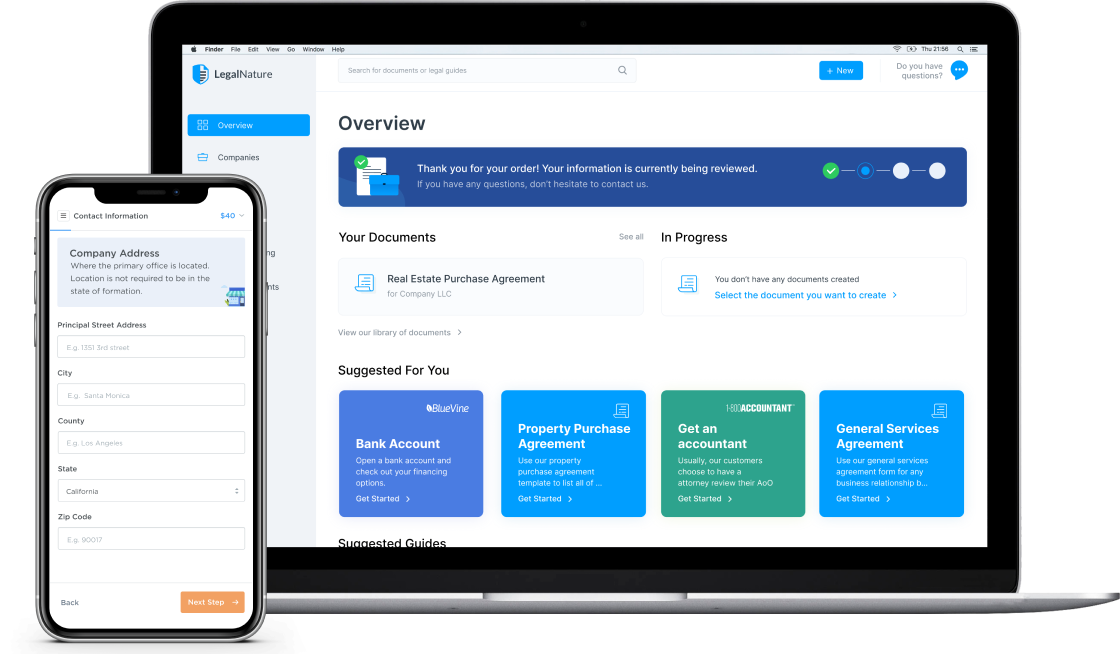

Fast & Easy
Quickly create new documents or business services.

Safe & Secure
Your documents and information are always kept private.

Reliable & Trustworthy
Over 4,000 five star reviews from our customers.

Access Anytime
Everything you need, directly from your dashboard.