


Kansas Articles of Incorporation
Kansas articles of incorporation register your company's name and intent to do business in Kansas as a domestic corporation. After the state approves them, your corporation can hold its first board meeting and prepare to begin operations.
Kansas


What Are Kansas Articles of Incorporation?
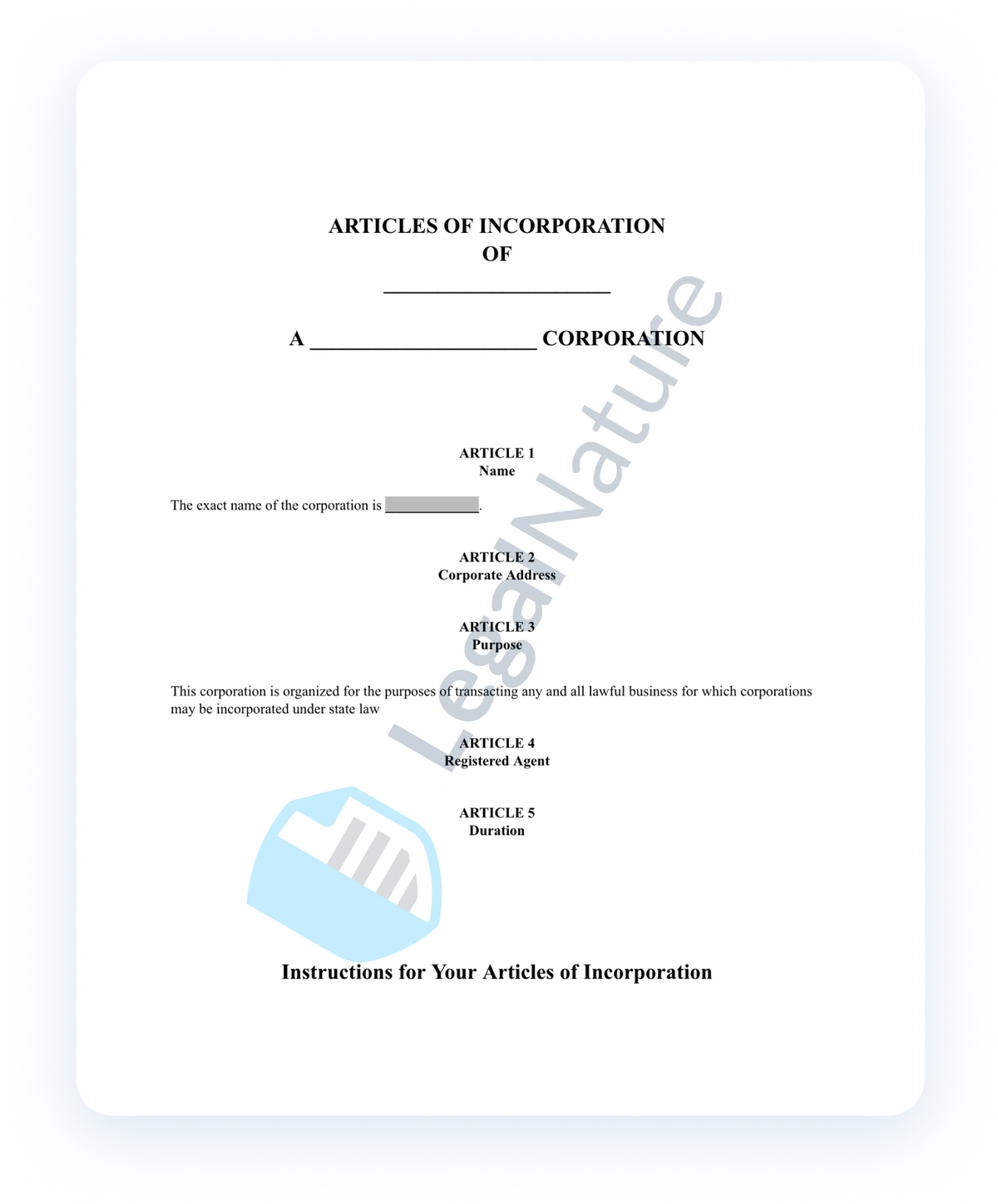
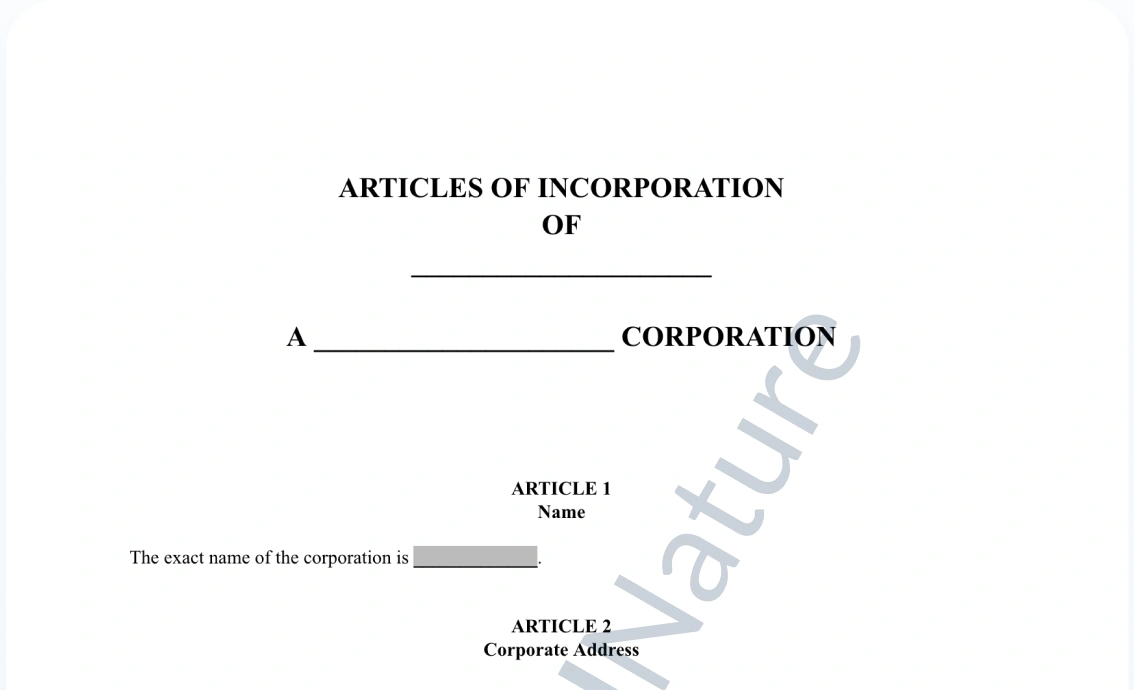
Kansas articles of incorporation are the document you file with the Kansas Secretary of State to form a corporation in Kansas. They must list the corporation's name, registered office and resident agent, purpose, authorized shares and par value, and each incorporator. (Kan. Stat. Ann. § 17-6002)
These public records outline the basic facts about your corporation, which often include:
- Corporate name
- Principal office address
- Registered agent information
- Initial directors, where the state requires them
- Stock information
Use the business formation document which best suits your needs
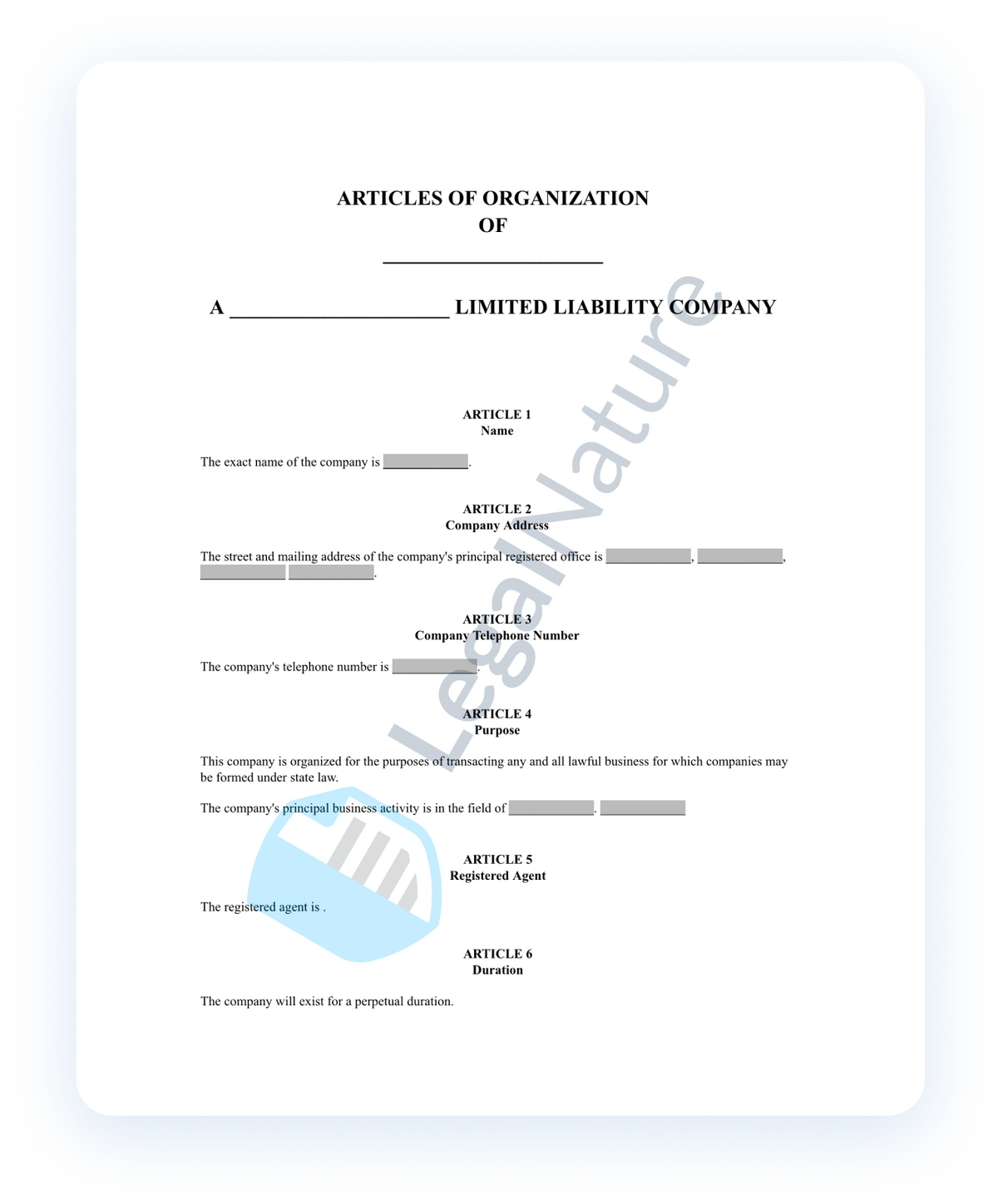
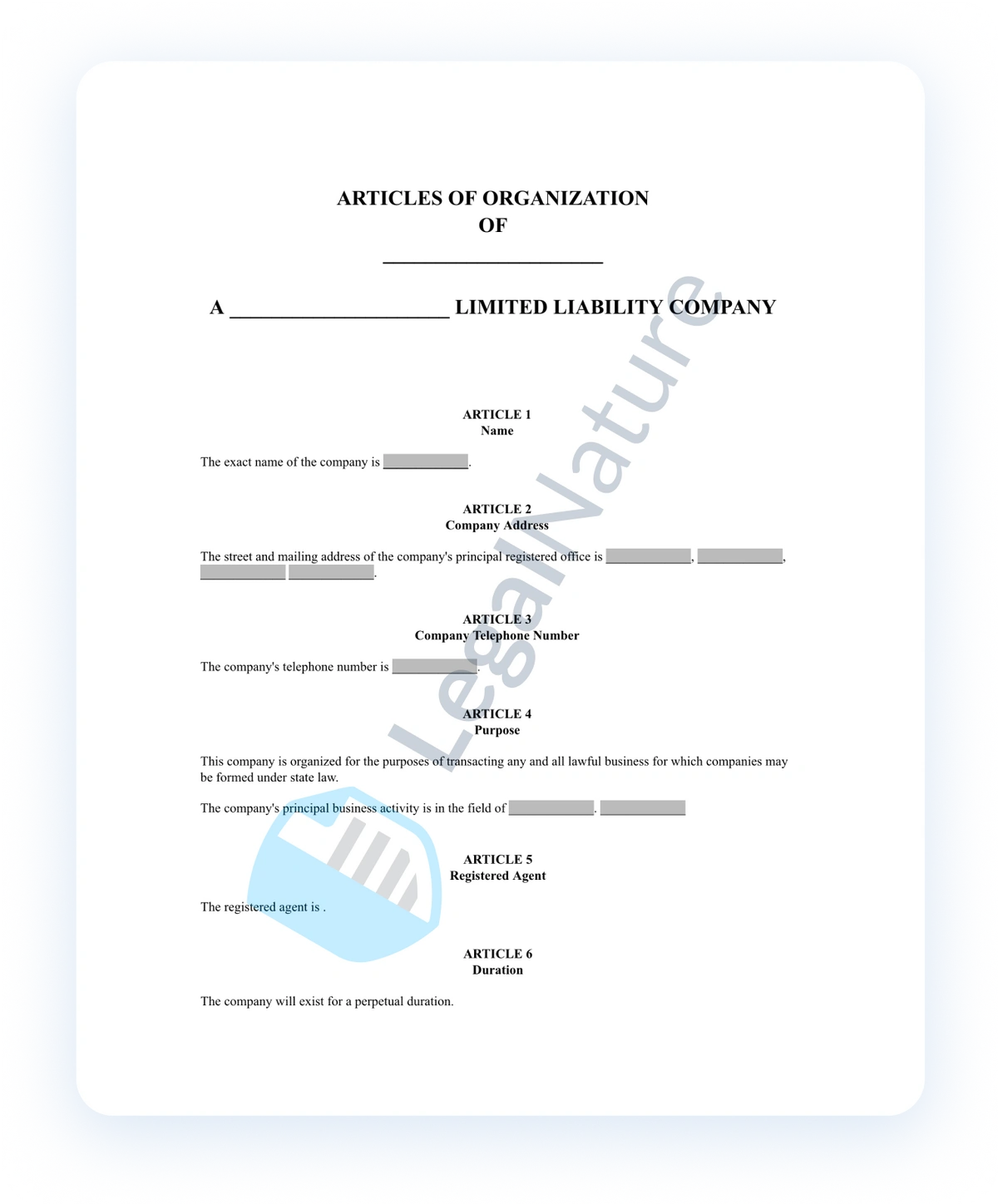
Articles of Organization Articles of organization are filed with a state to establish a limited liability company, or "LLC." LLCs offer liability and tax protections similar to that of a corporation, but with a different ownership and management structure.
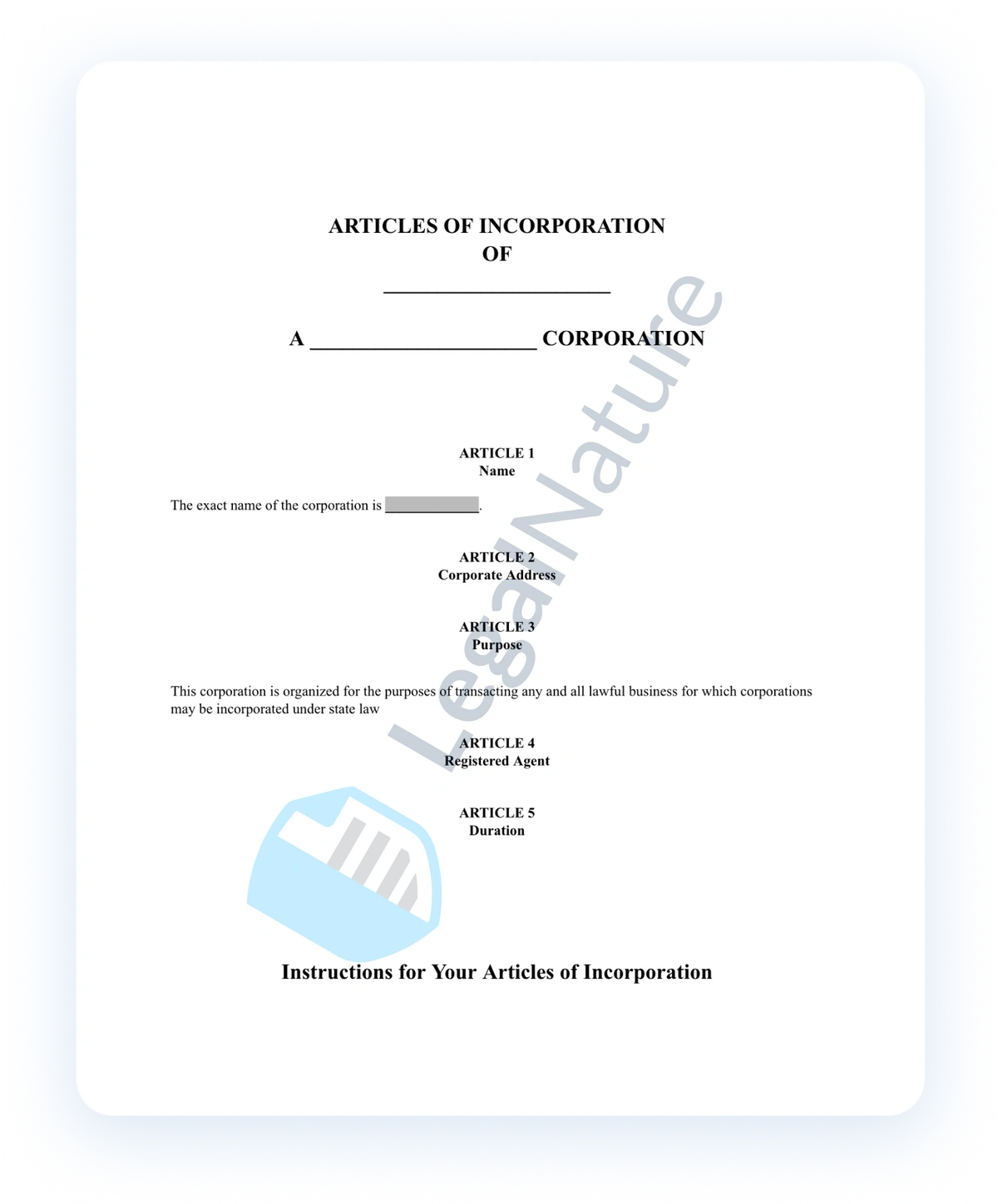
Certificate of Incorporation Some states refer to articles of incorporation as a certificate of incorporation. LegalNature's intuitive forms will create the correct document based upon your chosen state's requirements.
Articles of Amendment Sometimes information on articles of incorporation needs to be changed (e.g. change of company name or address). Articles of amendment are filed with the corporation's state in order to submit amendments to articles of incorporation.
When to Use Kansas Articles of Incorporation
Kansas articles of incorporation are essential to establishing a corporation at the state level. Use them to do the following:
- Form a new corporation: This document officially creates your company as a distinct legal entity
- Register with the state: Filing is required to register your corporation with the Kansas Secretary of State
- Define company structure: Your articles outline the basic structure of your corporation
- Protect personal assets: A properly maintained corporation can help shield personal assets from business liabilities
- Plan your tax approach: Forming a corporation is the first step toward choosing C corporation or S corporation tax treatment
- Comply with state law: Kansas sets specific requirements for forming a corporation, and your articles help you meet them
- Prepare for future growth: Well-drafted formation documents give your business room to expand
How to create your articles of incorporation
Select Kansas as your state.
Our articles of incorporation template dynamically changes according to the selected state's requirements. Since each state decides what details will be necessary to form a corporation, the required information can vary from one state to another.
Provide the corporation's name, company address, and other details
When choosing your business name, it is important to consider your state's naming requirements. As for your corporation's company address, keep in mind that it will function as an official business address. For this reason, a street address will most likely be required.
Set forth the corporation's board of directors and officers
Kansas requires your articles to name the initial directors only if the incorporators' powers end when it is filed. Directors oversee the corporation and appoint its officers.
Describe the corporation's stock information
Outline the types and number of shares that the corporation is authorized to issue. This is crucial for capital structure and investment strategies. Corporate stock represents an ownership interest in a corporation, typically divided into shares that signify a proportionate ownership stake in the business.
Why Create Articles of Incorporation and a Corporation?
A corporation is a business entity formed separately from its owners. It can take on its own business debts, expenses, and tax liabilities.
The corporate structure creates a legal separation between the business and its directors, owners, and officers. This can shield them from personal liability if the business faces financial or legal trouble.
This limited liability protection is not absolute. It can be lost if owners fail to follow proper business practices or engage in fraud.
Kansas Articles of Incorporation Requirements
Kansas sets its own rules for what your articles must include, who can sign them, and what else you must file. These are the Kansas rules to know before you file.
What Must Kansas Articles of Incorporation Include?
Kansas requires your articles to include the following:
- A corporate name that meets Kansas naming rules
- The postal address of the registered office in Kansas and the name of the resident agent at that address
- The nature of the business, which can be any lawful act or activity
- The total number of authorized shares and their par value, or a statement that the shares have no par value
- The name and postal address of each incorporator
- The names and postal addresses of the initial directors, if the incorporators' powers end when the articles are filed
Who Can Sign and File Kansas Articles of Incorporation?
Any person, partnership, association, or corporation may incorporate in Kansas, regardless of where they live or were formed. You file your articles with the Kansas Secretary of State.
Does a Kansas Corporation Need a Registered Agent?
Kansas requires your articles to give the registered office address and the name of the resident agent, Kansas's term for a registered agent.
These requirements reflect Kansas's corporation statutes, and some filings may call for more information.

Why choose LegalNature?
Frequently asked questions
Why do I need to file Kansas articles of incorporation?
Your articles give the Kansas Secretary of State the information it needs to approve your new corporation. State business laws protect consumers and residents, so corporations must meet these requirements to receive the benefits of the corporate structure.
In what state should I register my corporation?
Although businesses can register to conduct business in any state, most businesses choose to organize their corporations in the state where their principal office is located. Although it may make sense to choose a different state for a corporation because of that state’s tax treatment, some states impose additional taxes, making it cheaper to organize under a neighboring state’s laws. If you are considering establishing your corporation in a state other than your own, it is important that you investigate whether that state requires additional paperwork.
Will I need a registered agent?
A registered agent is an individual or business entity residing within the company's state. All registered agents must maintain normal business hours at a physical address that is open to the public. The registered agent’s main function is to ensure reliable communication between the company and any third party, by receiving and forwarding legal documents, notices, or other requests to the company. It is mandatory that every company provides the registered agent's full name. If the registered agent is a business entity, then you should include the entity designation of the business such as Inc. or Co. It is also mandatory that every company provides the address where the registered agent is required to receive any legal correspondence. Check with your state regarding any specific requirements for listing the registered agent's address. LegalNature provides the registered agent with the option to use the company's physical address, the company's mailing address, or any other address where the registered agent is willing and able to receive mail. It is important to point out that some states require the registered agent’s consent in order to be named as such.
How do I file my articles of incorporation in Kansas?
You file your articles with the Kansas Secretary of State, along with any required filing fee. Many states accept filings online or by mail, and mailed filings usually take longer. Some states also offer expedited processing for an extra fee.
Create your articles of incorporation in minutes
Complete our form

Preview & download your document

Review and sign your document
