


Arkansas Lease Agreement
Create a legally compliant lease agreement for your Arkansas rental property in minutes.
Select a state


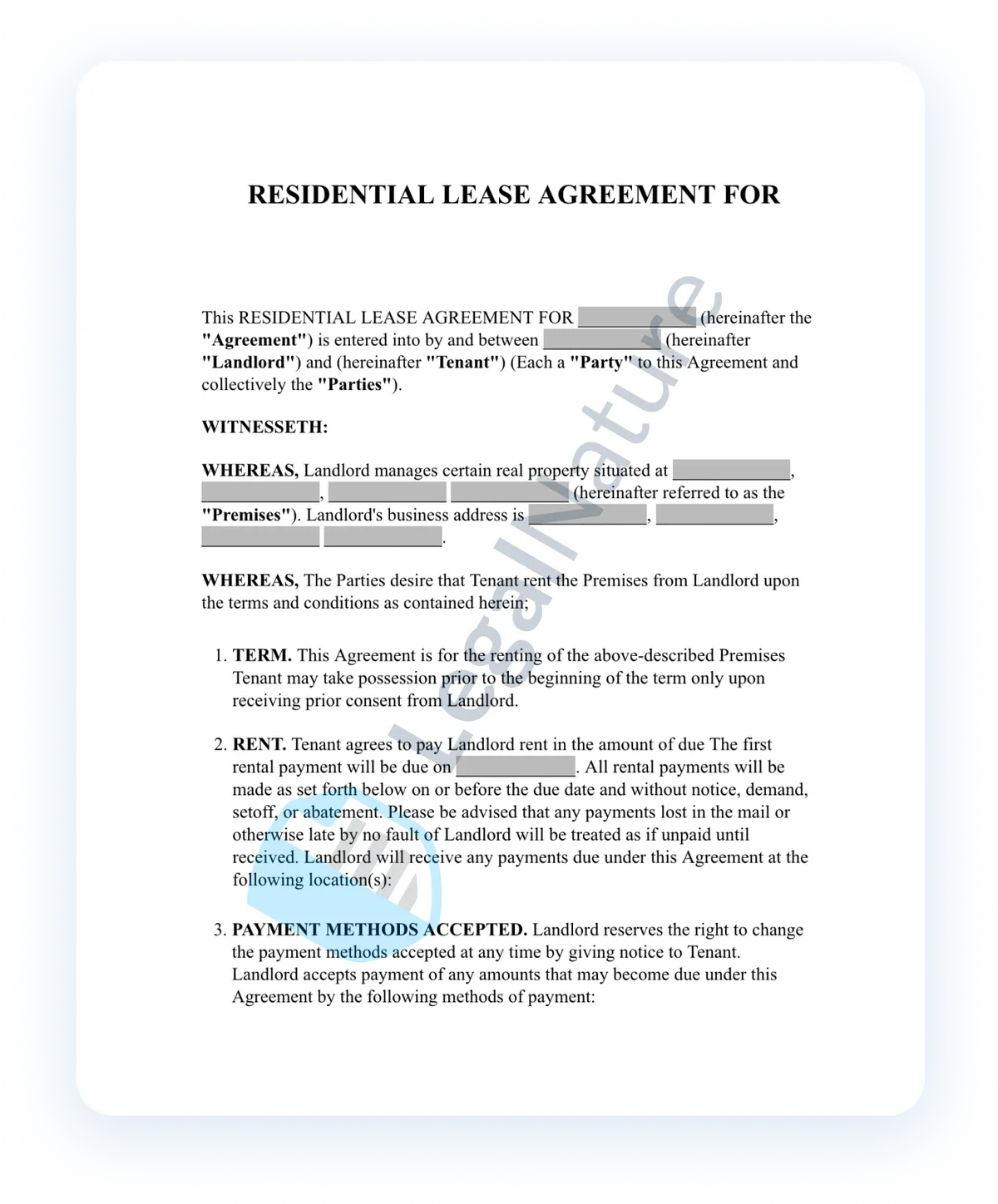
What Is a Lease Agreement in Arkansas?
An Arkansas lease agreement is a legally binding contract between a landlord and a tenant that grants the tenant the right to occupy a property for a fixed period in exchange for rent. It gives both parties clarity, predictability, and legal protection for every part of the rental process, and it is governed in part by Ark. Code Ann. § 18-17-401 (West). A residential lease is the most common form, used when renting a property for someone to live in.
Lease agreements are essential whenever a landlord-tenant relationship exists in Arkansas. Creating one before the tenant takes possession or pays rent helps prevent misunderstandings about rent, responsibilities, and rules from turning into costly disputes.
Use the right type of lease agreement for your needs
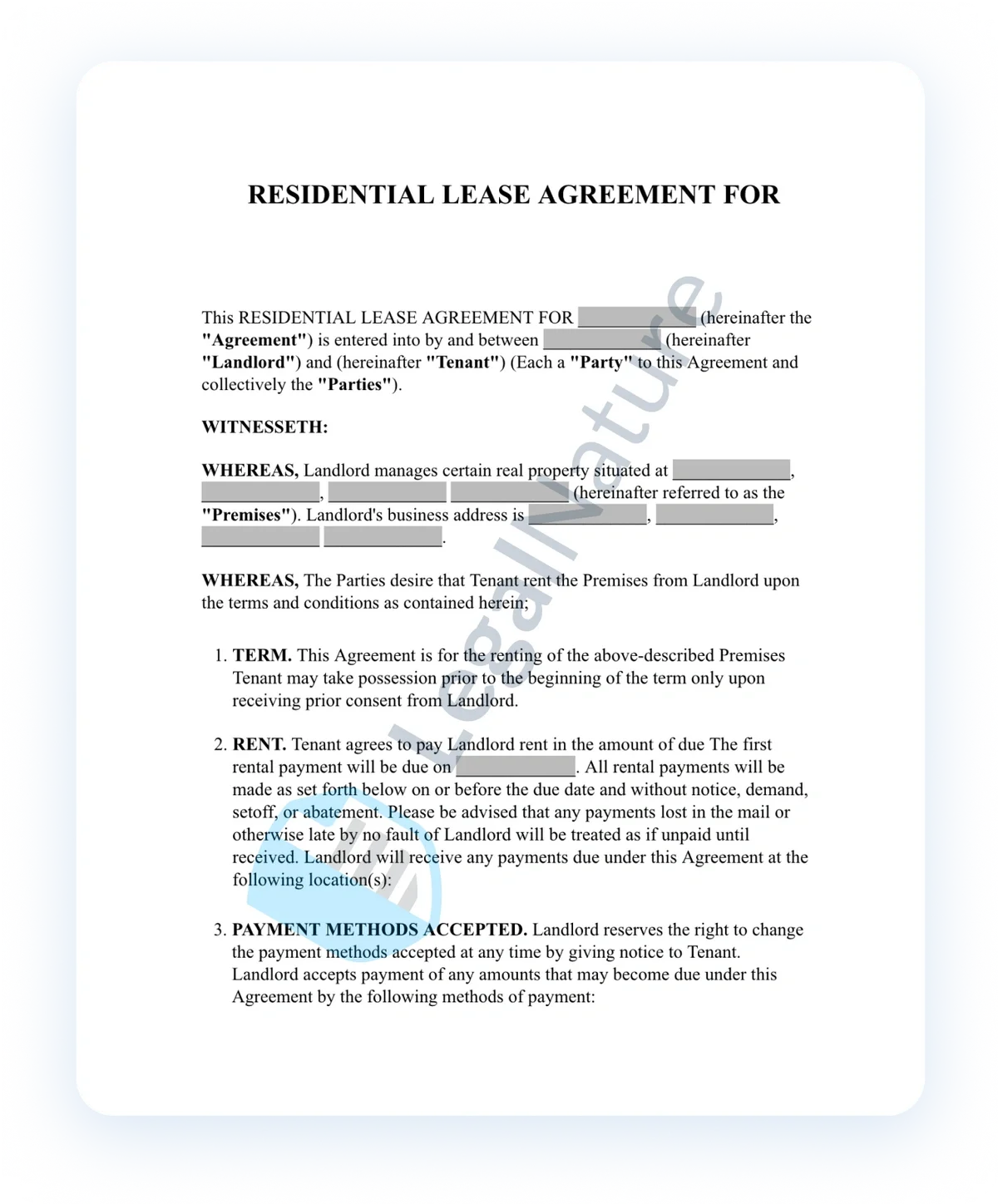
Residential Lease Agreement For renting property used as a personal dwelling (apartments, houses, condos). These leases are heavily regulated by state landlord-tenant laws that provide strong consumer protections.
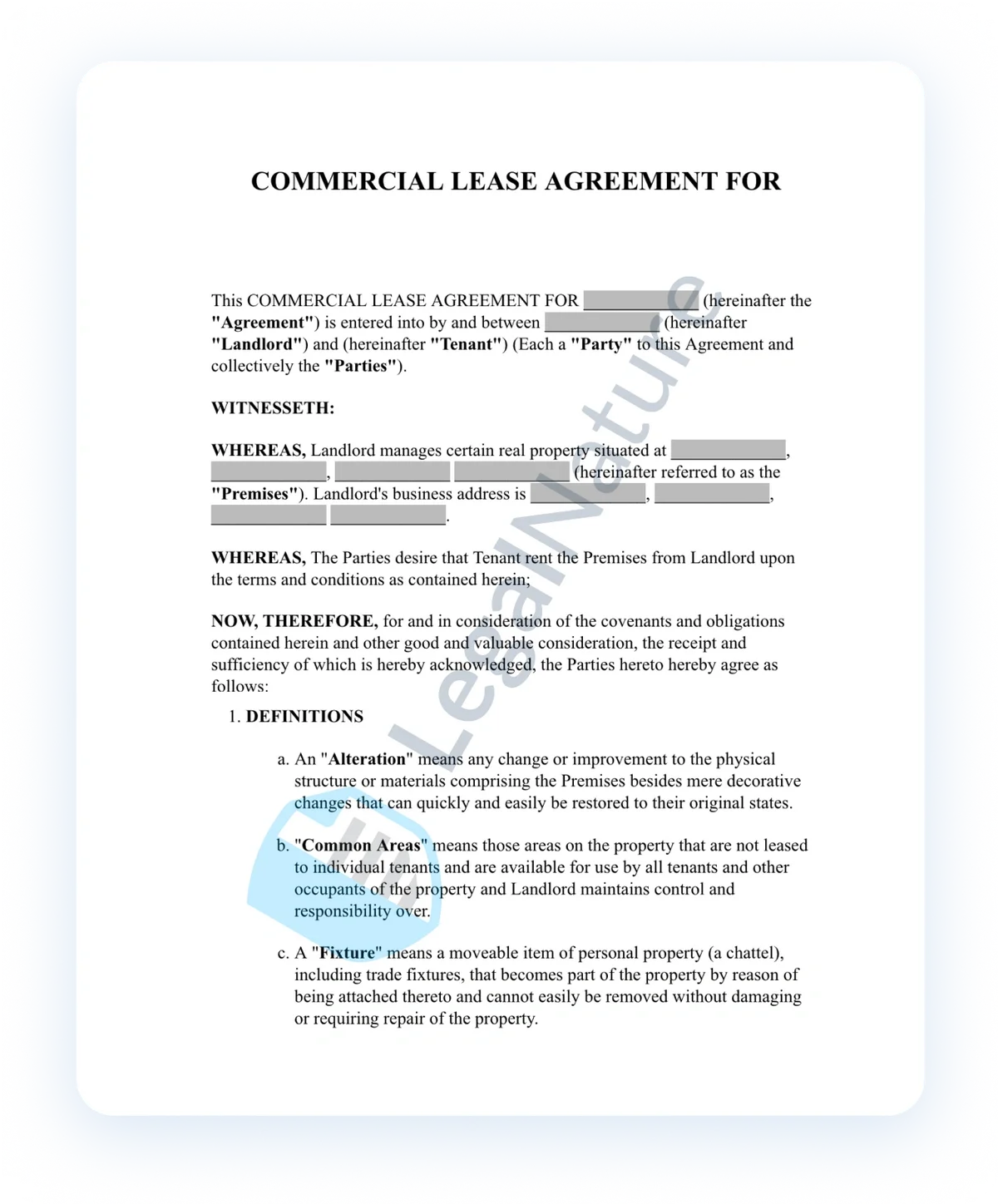
Commercial Lease Agreement For renting property used for business purposes (retail spaces, offices, warehouses, industrial facilities). These leases operate under "caveat emptor" (buyer beware) with fewer statutory protections. Terms are largely negotiable between sophisticated parties.
When to create a lease agreement
Lease agreements are created to solidify the landlord-tenant relationship between two parties. A lease agreement should be created before a tenant takes possession of the property or pays any rent. Think of it as establishing the ground rules before the game begins—you want everyone to understand and agree to the terms before any commitments are made.
The leasing process often begins with a rental application, which is used to screen and qualify tenants before drafting the standard agreement. The standard agreement serves as a foundational document that can be customized to fit the specific property and legal requirements.
Creating the lease before occupancy protects both parties from significant risks. Without a written agreement, misunderstandings about responsibilities, rules, or payment terms can quickly escalate into costly disputes.
How to create your lease agreement in 3 easy steps
Gather Information
Start with the basics: the parties' names and addresses, when the agreement begins and ends, and the rent and security deposit amounts. Note any special maintenance or repair needs for the unit. A rental application can help you collect this information from a prospective tenant.
Answer Key Questions
LegalNature's questionnaire guides you through each step and adjusts your Arkansas lease agreement based on your answers, so you only include the provisions that apply to your situation.
Review and Sign
Always read your document thoroughly to ensure it contains everything you need and is free of errors. In any case, once you finish creating your document, you will be able to alter it as much as you like in Microsoft Word. However, if you do not need to make any changes, you can simply download the PDF version and have the parties sign the agreement.
Landlord Disclosure Requirements in Arkansas
Landlord disclosure requirements vary by city and county in Arkansas in addition to any statewide rule, so it's highly recommended to consult with an attorney or your local housing authority to confirm what your specific Arkansas lease must disclose. Common disclosures include the identity of the person managing the property and who may accept legal notices on the owner's behalf.
For properties built before 1978, federal law separately requires a Lead-Based Paint Disclosure regardless of state, along with the EPA-approved pamphlet on lead hazards.
Security Deposit Rules in Arkansas
Arkansas limits the security deposit to 2 months' rent, though this limit doesn't apply to landlords who own 5 or fewer properties unless a third party manages the property, and landlords must return it, or an itemized list of deductions, within 60 days. As a general practice, landlords typically collect a deposit to cover unpaid rent or damage beyond normal wear and tear, and must return the remaining balance after any lawful deductions once the tenancy ends.

Why choose LegalNature?
LegalNature offers the guidance to navigate the nuances of creating a lease agreement across all 50 states and the District of Columbia. LegalNature offers a 30-day money-back guarantee. If you're not happy, then we’re not happy. Give us a call and let us help.
Frequently asked questions
What is a lease agreement in Arkansas?
A lease agreement in Arkansas is a legally binding contract between a landlord and a tenant that grants the tenant the right to occupy a property for a set period in exchange for rent. It sets out the rights and obligations of both parties for the length of the tenancy.
When should I use a lease agreement?
It is highly recommended that a lease agreement be used whenever a landlord-tenant relationship exists. These days, a thorough and well-written lease agreement is essential for ensuring that the rights of both parties are upheld. It provides valuable recourse to parties whose rights are infringed upon. This dramatically reduces the likelihood of disputes and helps ensure all parties fulfill their end of the bargain.
What's the difference between a lease and a rental agreement in Arkansas?
A lease agreement creates a fixed-term tenancy that ends on a specific date, while a rental agreement creates a periodic tenancy that renews automatically, such as month-to-month, until either party gives proper notice to end it.
What must be included in a Arkansas lease agreement?
At minimum, most Arkansas leases should include the names and addresses of all parties, the rental term, the rent amount and payment terms, the security deposit amount, utility and maintenance responsibilities, and any disclosures required by state or local law.
What happens if a tenant stays after the Arkansas lease ends?
If a tenant continues occupying the property after the lease term ends without a new agreement or an eviction notice, the tenancy typically converts to a periodic tenancy on the same terms until either party provides the notice required under Arkansas law.
Create your lease agreement in minutes
Complete our form

Preview and download your document

Review and sign your document
