


Texas Notice to Vacate
A notice to vacate, also called an eviction notice or notice to quit, is a legal document sent by landlords to provide written notice of a violation or end a tenancy in a rental property
Select a state


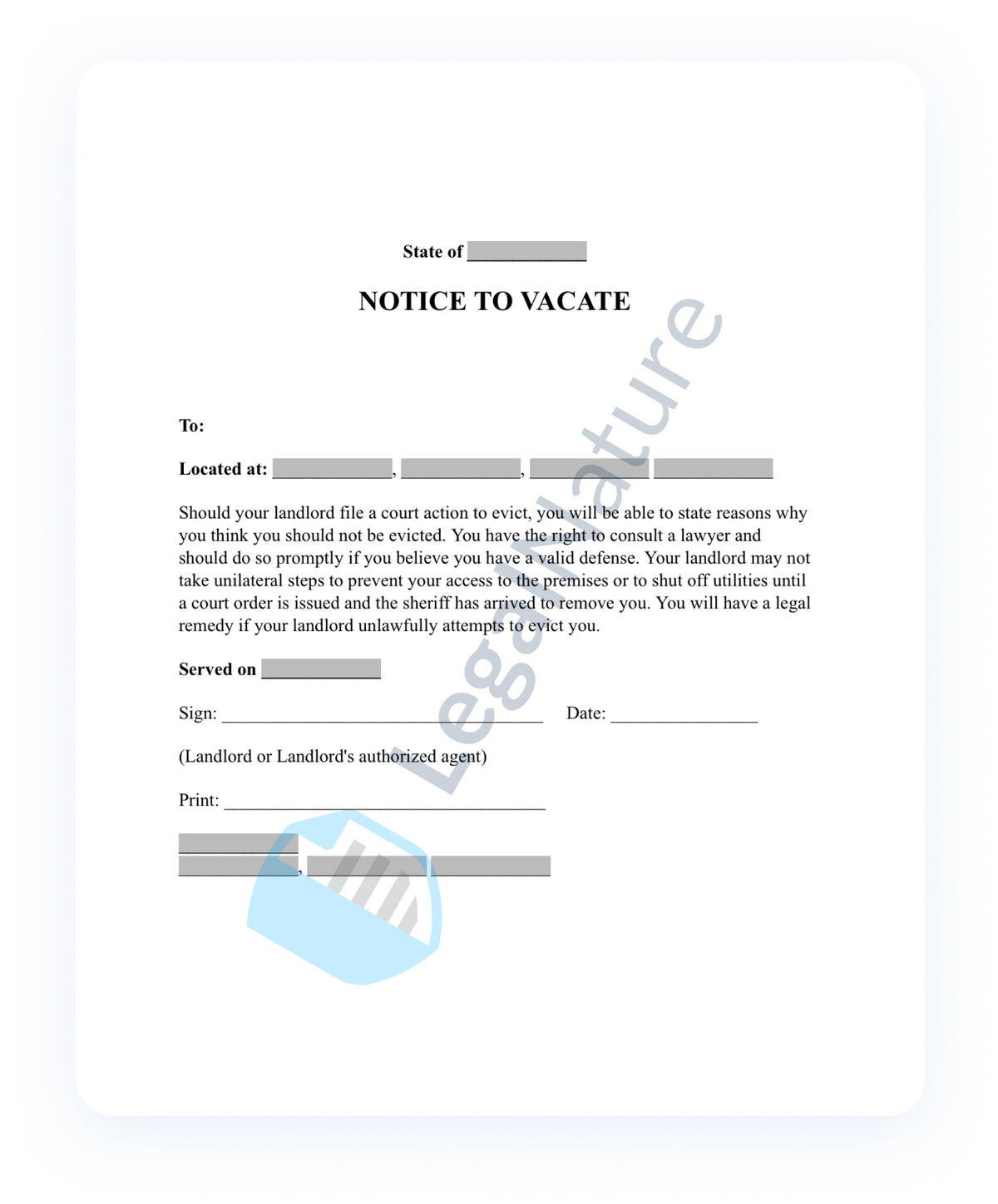
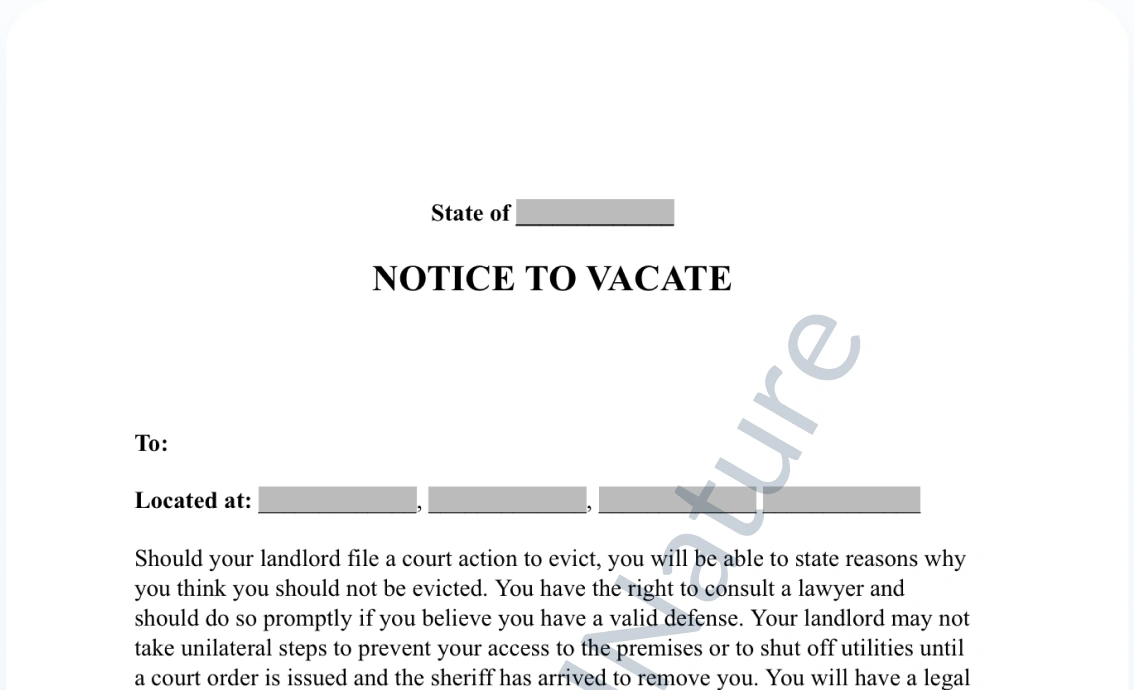
What is a notice to vacate in Texas?
A notice to vacate in Texas is a legal document sent by landlords to provide written notice of a lease violation or to end a tenancy under Prop. Code § 24.005. In most cases, this is the first step to beginning the legal eviction process.
When to use a notice to vacate in Texas
- Late payment or non-payment of rent
- The tenant has violated the terms of the rental agreement
- You want to formally notify your tenant that they must resolve a lease violation within a certain amount of time or else they will be evicted from the property
- Your tenant has remained on the property after the lease term has ended or after you notified them that you are ending their tenancy
Complete a notice to vacate in three easy steps
1. Determine the Grounds for Eviction
Most states, including Texas, require you to provide reasons for evicting your tenant, such as non-payment of rent or violation of the terms of the lease under Prop. Code § 24.005.
2. Complete Our Notice to Vacate Form
Provide detailed information about the rental property, including the full address, the name of the tenant, and the date that the lease was signed.
3. Send the Notice to Vacate to the Tenant
The service of a notice to vacate officially commences the legal eviction process. Depending on your jurisdiction, you may be able to send the notice to vacate by delivering it personally to the tenant, posting it to the tenant’s door, or delivering it by certified mail.
Texas Notice Periods
Note that while these notice periods differ depending on the reason for eviction, Texas law sets specific timeframes landlords must follow.
Nonpayment of Rent: 3 days (Prop. Code § 24.005).
Lease Violation: The notice period depends on the specific circumstances of the tenancy (Prop. Code § 92.058). LegalNature's state-specific form automatically applies the correct timeframe based on your answers.
End of a Fixed-Term Lease: 3 days (Prop. Code § 24.005).
Month-to-Month or At-Will Tenancy: The notice period depends on the specific circumstances of the tenancy (Prop. Code § 24.005). LegalNature's state-specific form automatically applies the correct timeframe based on your answers.
Note that certain circumstances require specialized notices. As state and local laws vary, it is important to understand the laws in your area. Regardless of which notice you need, each serves to exercise the legal rights afforded by the landlord-tenant relationship.
Elements of a notice to vacate document
Reason for eviction: LegalNature’s notice to vacate form builder will guide you through selecting the appropriate reason for eviction and include the appropriate notice period options.
Notice period: Landlords must adhere to state-mandated minimum notice periods.
Tenant response timeline: Clearly state the time allowed for tenants to: a) remedy any violation (if applicable), or b) vacate the property.
Serving the notice: Each state has different rules that landlords are required to know and follow. LegalNature’s form includes a Proof of Service page that helps landlords prove that their notice was properly served. While optional in many states, we recommend that landlords always use it.
Frequently asked questions
What's the difference between an eviction notice, notice to vacate, and notice to quit?
Any notice directing a resident to leave a property is considered be an “eviction notice.” Both a “notice to vacate” and a “notice to quit” are types of eviction notices that seek the same basic goal: to formally notify someone that they must leave the property. Some of the most common reasons for issuing an eviction notice are the termination or violation of a lease, mortgage foreclosure, or rent delinquency. Whether it be a notice to quit or a notice to vacate, all eviction notices must comply with applicable state laws in order to have any legal effect.
How is a notice to vacate served in Texas?
Texas law (Prop. Code § 24.005) allows personal delivery to the tenant or a household member 16 or older, or posting the notice on the tenant's front door — certified mail is not itself a statutory delivery method unless the lease provides for it.
What is a notice for termination WITHOUT cause?
A notice for termination without cause is used by landlords to end a tenancy where the tenant has not done anything wrong. These types of eviction notices are frequently used by landlords who wish to raise the rent and need to remove the tenant in order to do so. In general, a 30-day notice to vacate is used to end the tenancy of month-to-month rentals or a lease agreement that has been in existence for less than one year. A 60-day notice to vacate is most frequently used to end a lease agreement that has been in existence for at least one year.
What is a notice for termination WITH cause?
Landlords use a notice for termination with cause to rectify a tenant’s failure to comply with obligations found within a lease agreement. A landlord should always be familiar with their local and state laws as the rules for serving an eviction notice can vary greatly.
Common causes are:
- failure to pay rent,
- damaging the property, or
- violating one or more terms of the lease agreement.
Depending on applicable laws, a 3-day notice to vacate may be used when a tenant has failed to pay rent and the landlord wants to remedy this situation as quickly as possible.
How long does a notice to vacate take in Texas?
The notice period in Texas depends on the reason for eviction — see the Texas Notice Periods section above for the specific timeframes and governing statutes. Once the notice period expires and the tenant has not complied, the landlord may proceed with filing a formal eviction action in court.
Create your notice to vacate in minutes
Complete the form

Preview your document

Download and print
