


Utah Power of Attorney
Using a power of attorney enables you to give someone permission to act on your behalf and manage medical, financial, real estate, business, or personal affairs in Utah.
Select a state


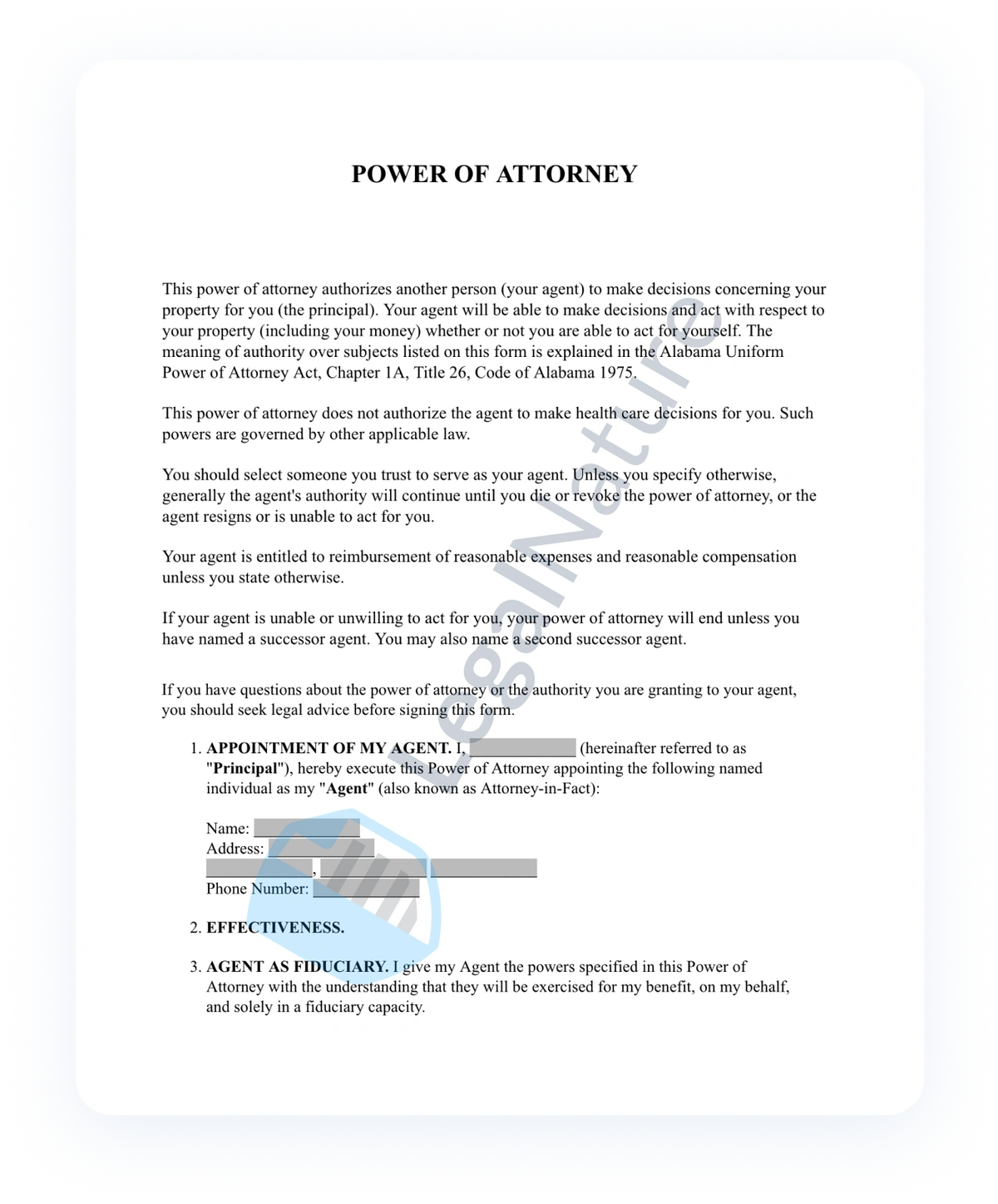
What is a power of attorney?
A power of attorney (POA) in Utah is a legal document authorizing one person — the agent or attorney-in-fact — to act on behalf of another (the principal) in financial, medical, real estate, or personal matters. A power of attorney in Utah is governed by Utah Code §§ 75A-2-101 to 75A-2-403. Because Utah law makes powers of attorney durable by default, your document will remain valid even if you become incapacitated unless you state otherwise.
Choose the right power of attorney for you
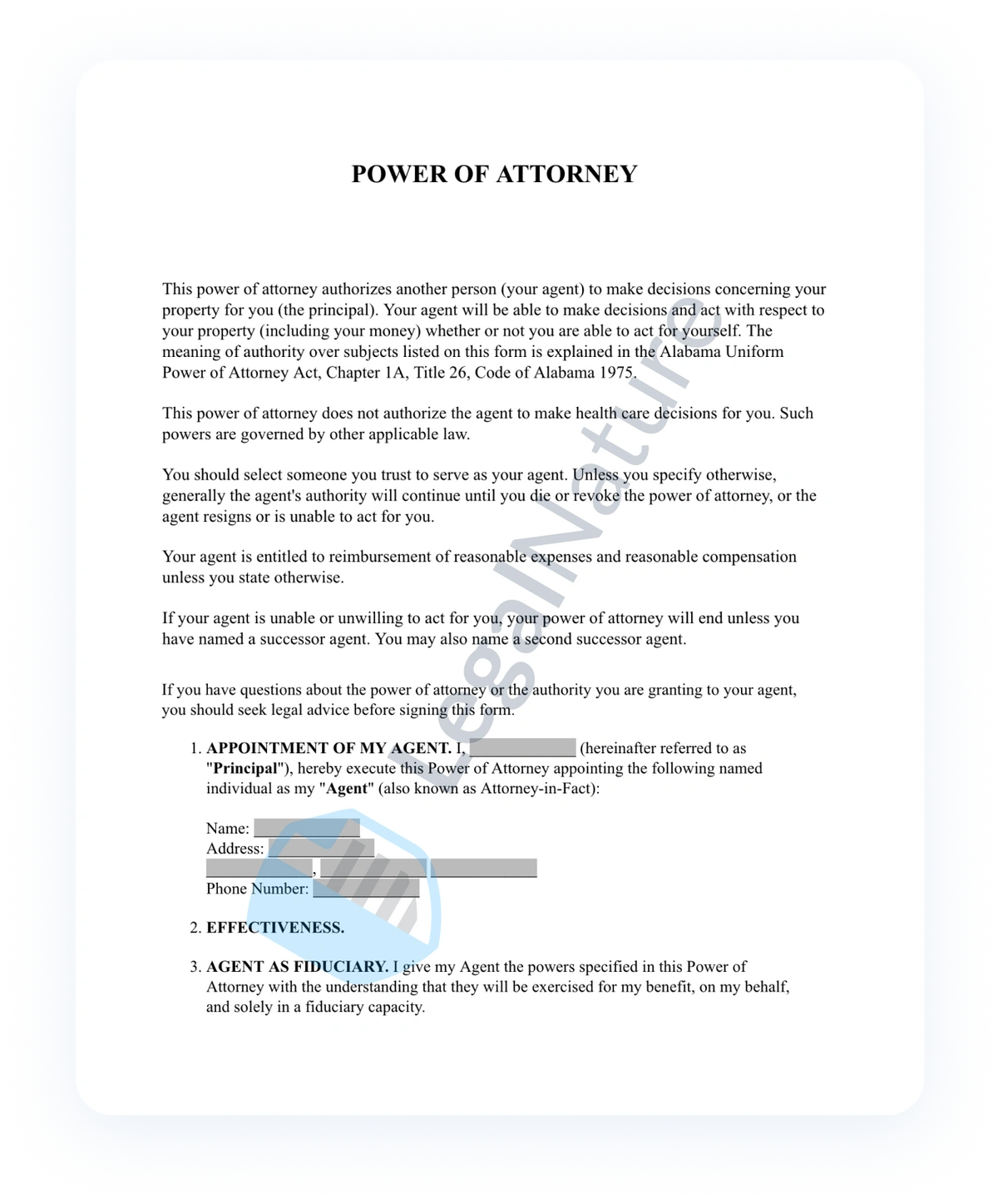
Durable Power of Attorney Stays valid even if you become incapacitated — the most common choice for long-term financial and estate planning. In Utah, this is the default outcome under the Uniform Power of Attorney Act; you only need to add language if you want the opposite result.
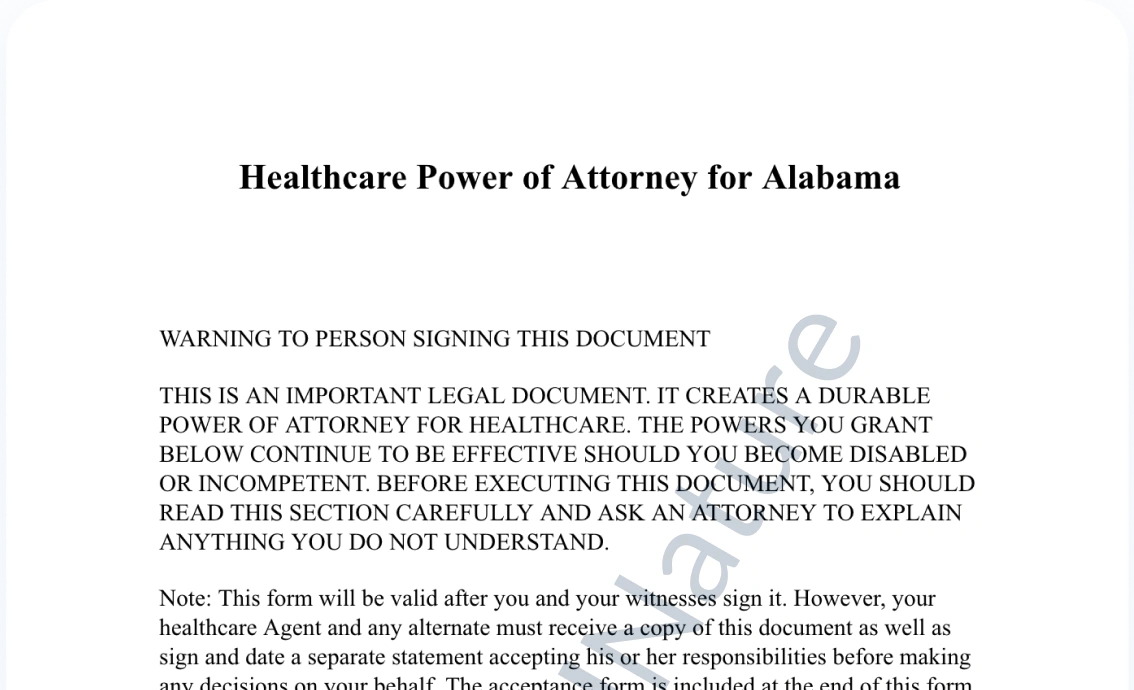
Healthcare Power of Attorney Authorizes a trusted person to make medical decisions if you are unable to communicate your wishes — including end-of-life care and treatment choices. Also referred to as a medical power of attorney in many states.
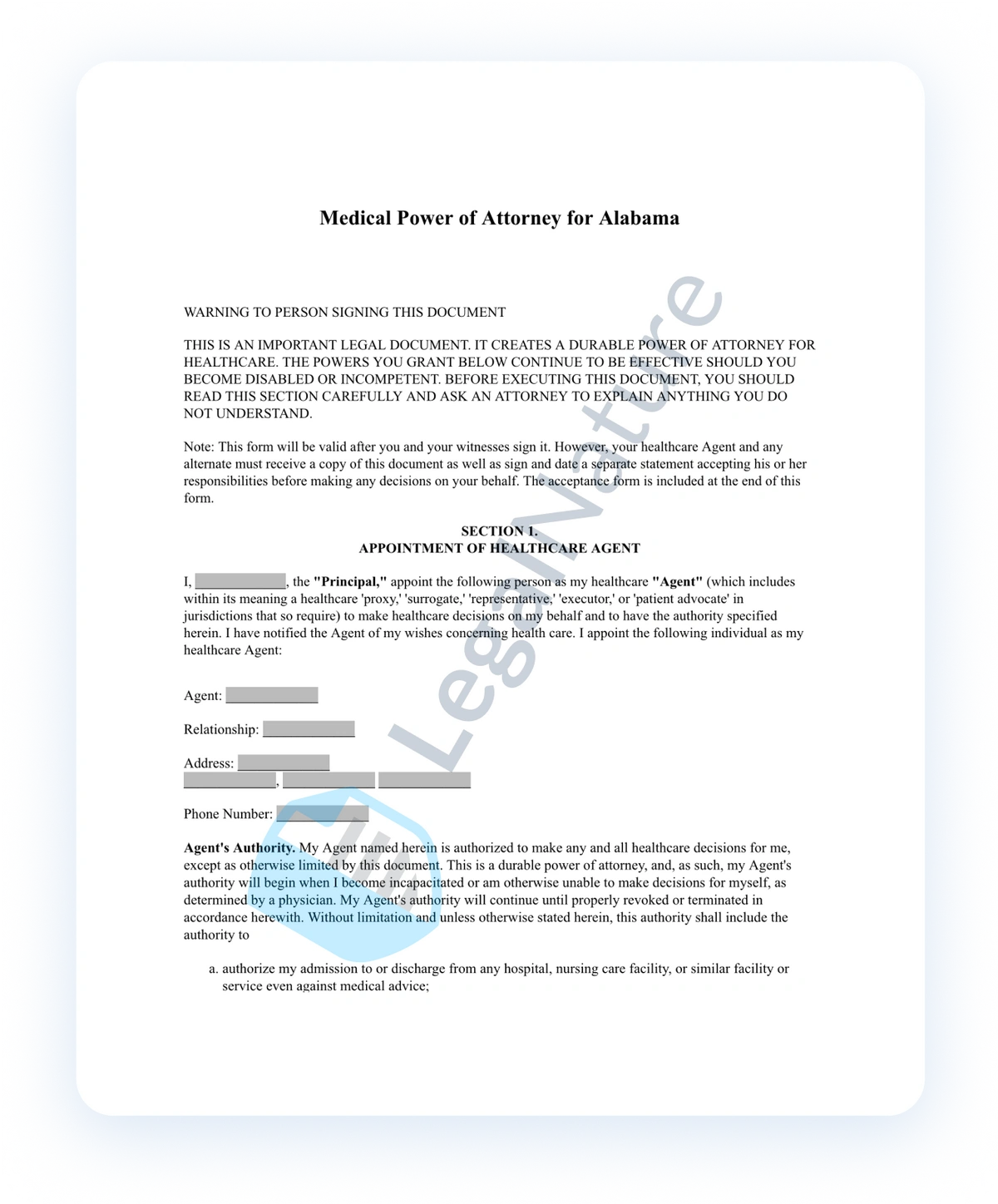
Medical Power of Attorney Another name for a healthcare power of attorney. Authorizes a trusted person to make medical decisions on your behalf in the event of incapacitation. Includes end-of-life care and treatment choices.
How to Create a Power of Attorney in Utah
Choose Your POA Type
Select the right type of power of attorney for you and your situation.
Name Your Agent
Choose a trusted adult (18+) who will act on your behalf and define the scope of their authority.
Complete Our Online Form
Fill out LegalNature's guided form. Our template dynamically adjusts to Utah's requirements.
Sign, Notarize, and Distribute
In Utah, a financial power of attorney must be either notarized or signed in front of two witnesses. A healthcare power of attorney must be signed in front of two witnesses. Sign in the presence of the required witnesses and/or notary, then provide copies to your agent and any banks, healthcare providers, or institutions who may need to rely on it.

Why choose LegalNature?
LegalNature offers the guidance to navigate the nuances of power of attorney creation across all 50 states and the District of Columbia. LegalNature offers a 30-day money-back guarantee. If you're not happy, then we’re not happy. Give us a call and let us help.
Frequently asked questions
Does a power of attorney expire?
A power of attorney does not have an expiration date unless the principal includes a termination date in their power of attorney form. Nevertheless, it is recommended that you review the power of attorney regularly to determine if any changes are needed. Major life events, such as the birth of a child or receiving new assets, may make it necessary to amend the form or create a new one. If you need to do this, simply use LegalNature's form to revoke your first power of attorney and modify your wishes.
Can I revoke my power of attorney?
The principal is under no obligation to maintain a power of attorney and can end the power of attorney at any time and for any reason. It is always a good idea to notify your agent and any third-party institutions that you are cancelling your power of attorney.
How do I revoke a power of attorney?
To revoke a power of attorney, you need to expressly indicate this in a written form. You can use our revocation form to revoke your existing power of attorney or create a new power of attorney that indicates the previous power of attorney is revoked.
Do I need to register my power of attorney in Utah?
There is normally no need to register a power of attorney in Utah. The exception is real estate: if your agent will buy or sell property on your behalf, the POA typically needs to be notarized and recorded with your local county land-records office before the transaction closes.
Are there any powers that I cannot give my agent in Utah?
Yes. Under the Uniform Power of Attorney Act framework that Utah follows, your agent cannot make gifts, change your beneficiary designations, create or amend a trust, or waive your survivor annuity rights unless you specifically authorize each of these powers in the document. In every state, an agent can never vote on your behalf or make or change your will.
What is the difference between a general power of attorney and a durable power of attorney?
In all states, a general power of attorney will cease to be effective if the principal becomes incapacitated. If the principal specifies that the power of attorney is to be durable, then the agent’s powers will continue even if the principal is incapacitated.
Create your power of attorney in minutes
Complete our form

Preview and download your document

Review and sign your document
