Do You Need to Transfer Property?

Whether you're selling, gifting, or changing whose name is on the title, here's how to find the right deed and get it done.

Business Formation

How do you transfer property?

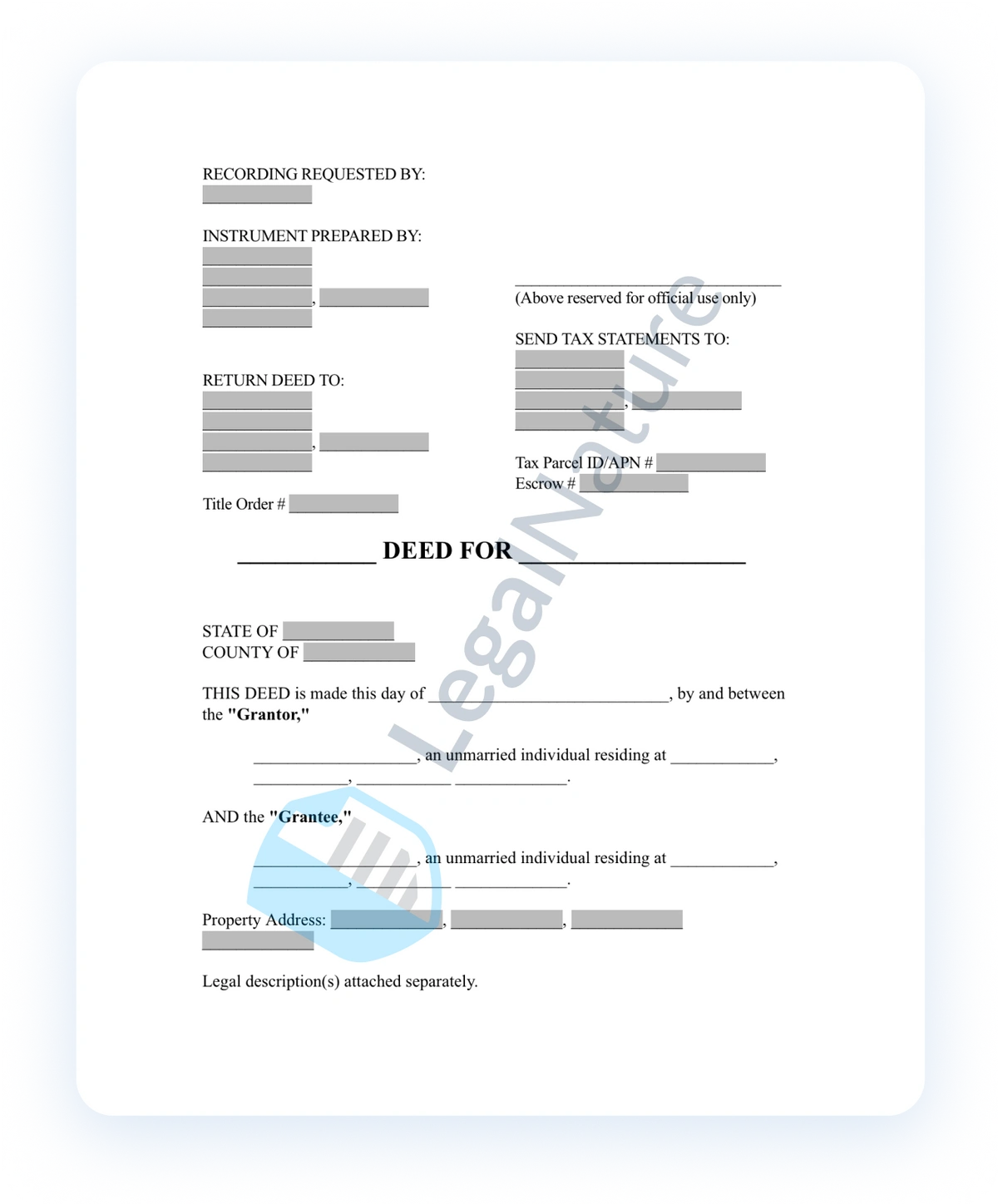
You transfer property by signing a deed — the legal document that moves ownership from the current owner (the grantor) to the new owner (the grantee) — and recording it with the county. The deed you need depends on who you're transferring to and how much title protection they require.

What's your situation?

The right deed depends on your relationship to the other party and how much protection they need. Find your situation below.

Selling to someone you don't know

A buyer you have no prior relationship with will want the strongest guarantee that the title is clean. A General Warranty Deed protects them against title defects from any point in the property's history, not just yours.


Selling commercial property, or property with a limited ownership history

When you can't speak to the property's full title history, a Special Warranty Deed limits your guarantee to defects that arose only during your own period of ownership.

Gifting to a family member, adding or removing a spouse, or moving property into a trust

When both parties already know and trust each other, you don't need title warranties. A Quit Claim Deed transfers whatever interest you hold quickly and simply.

Settling a divorce or estate distribution

These transfers are typically between parties who already have a relationship to the property, so a Quit Claim Deed is usually the right tool to clear one party's interest.

How the transfer process works

There are four steps to transferring property:

Step 1

Get the property's legal description

Find it on your existing deed, tax assessment, or through your County Recorder.

Step 2

Choose your deed type

Use the situations above to identify which deed fits your transfer.

Step 3

Complete LegalNature's state-specific form

Our questionnaire adjusts to your state's requirements automatically.

Step 4

Sign before a notary and deliver it

The grantor signs, and the deed is delivered to and accepted by the grantee. Filing your deed with the appropriate county protects your transfer against future competing claims.

Why choose LegalNature?

Why choose LegalNature?

LegalNature offers the guidance to navigate the nuances of property transfer across all 50 states and the District of Columbia. LegalNature offers a 30-day money-back guarantee. If you're not happy, then we're not happy. Give us a call and let us help.

What our customers are saying about us

Frequently asked questions

How long does it take to transfer a property deed?

Completing the deed itself typically takes minutes with LegalNature's guided form. The full transfer — including signing before a notary and recording with the county — depends on your local recording office's processing time.

Is a property deed the same as the title?

No. A deed is the physical document that transfers ownership; the title is the legal concept of who owns the property. Signing and recording a valid deed is what gives the grantee title.

Can I transfer property without selling it?

Yes. Gifts, divorce settlements, trust transfers, and adding or removing someone from a title are all common transfers that don't involve a sale. A Quit Claim Deed is usually the right tool for these transfers.

Does transferring property affect my taxes?

A change in ownership can trigger a property tax reassessment and may have gift or capital gains tax implications depending on how the property was transferred. Consult a tax professional to understand how a transfer affects your specific situation.

What is a property transfer form?

A property transfer form is another name for a property deed — the legal document used to move real estate ownership from one person to another. The specific form you need depends on your situation, such as a Quit Claim Deed, General Warranty Deed, or Special Warranty Deed.

Can I transfer property to an LLC?

Yes, property is often transferred into an LLC for liability protection, typically using a deed similar to other ownership transfers. Because this can affect your mortgage, insurance, and tax situation, it's highly recommended to consult with an attorney or tax professional before making the transfer.

Can I add or remove someone from a property title?

Yes. Adding or removing someone from a title, such as a spouse, is done by executing a new deed that reflects the updated ownership. A Quit Claim Deed is the most common tool for this since the parties involved typically already know and trust one another.

What real estate forms do you need to transfer property?

At minimum, you'll need a deed — the document that legally transfers ownership. Depending on your state and situation, you may also need a transfer tax declaration or similar disclosure form, which your County Recorder's office can specify.