


South Carolina Quit Claim Deed
A quit claim deed is a common deed used to transfer property from one person to another in South Carolina.
Select a state


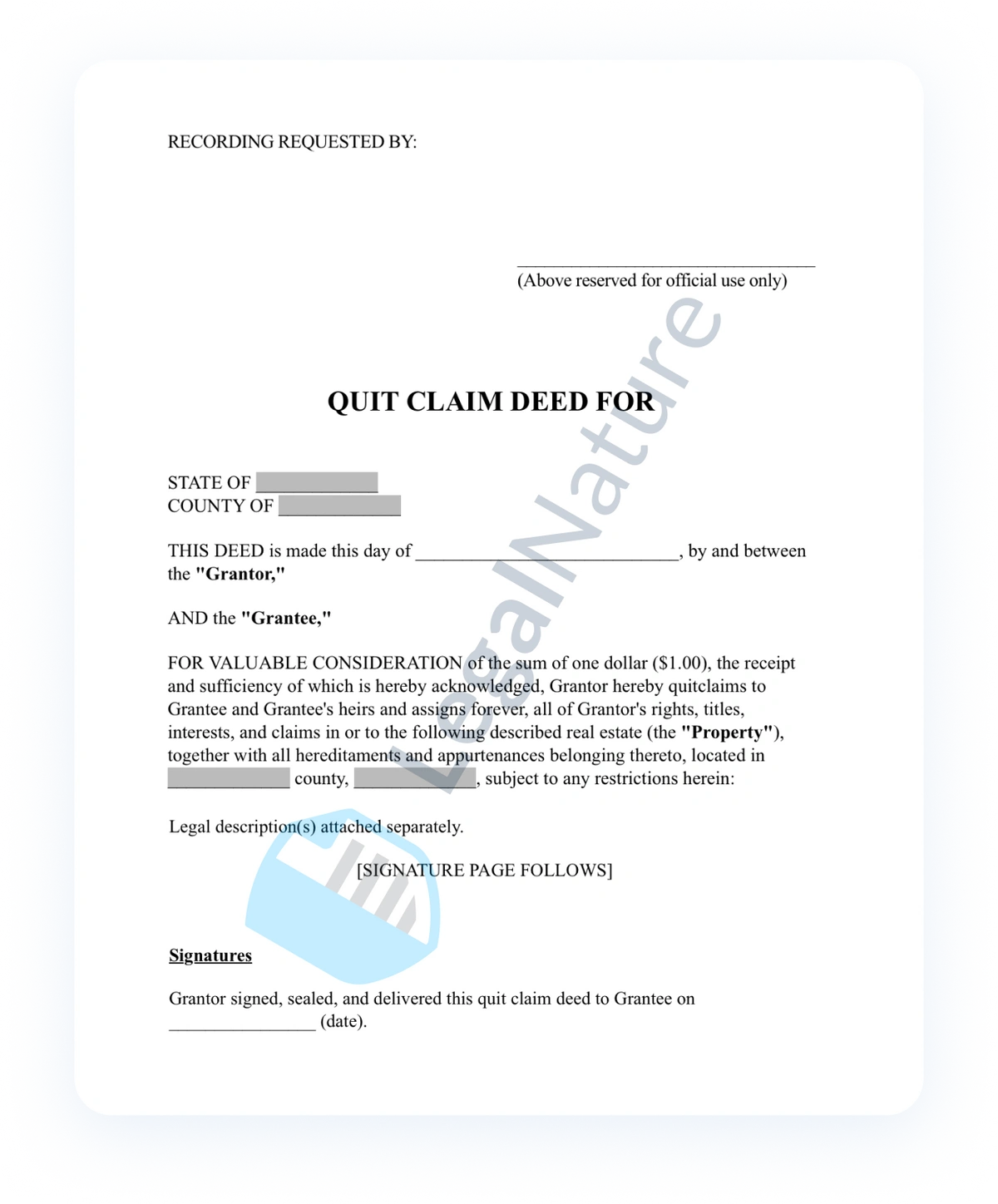
What Is a Quit Claim Deed in South Carolina?
A South Carolina quit claim deed is a legal document used for transferring ownership of real estate from one party (the grantor) to another (the grantee) without providing any guarantees about the property's title or the grantor's ownership rights. The person giving the property, known as the grantor, and the person receiving the property, known as the grantee, must be accurately identified in the document to ensure a valid transfer. Under S.C. Code Ann. § 27-7-10, the deed conveys only the interest the grantor actually owns at the time of transfer — nothing more, nothing less.
A South Carolina quit claim deed works by allowing the grantor to quickly transfer whatever property interest they hold to the grantee, without guaranteeing that interest is valid or that the title is clear. This makes it a common choice for family transfers, adding or removing a spouse from title, correcting a title error, or transferring property into a trust — but not for standard sales between parties who don't already know and trust each other.
Use the correct property deed for you
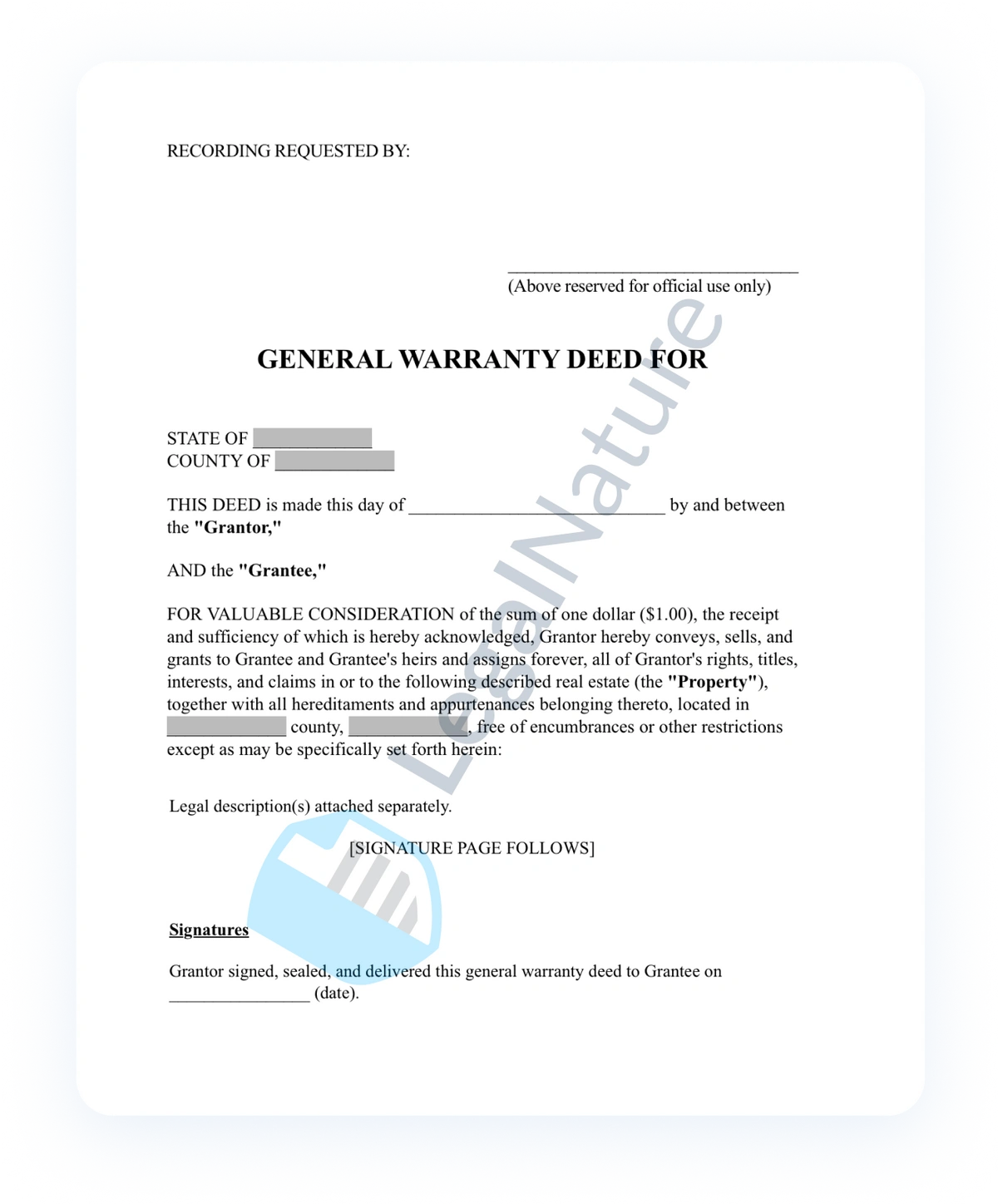
General Warranty Deed This type of deed provides comprehensive guarantees about the property's title and the seller's right to transfer it.
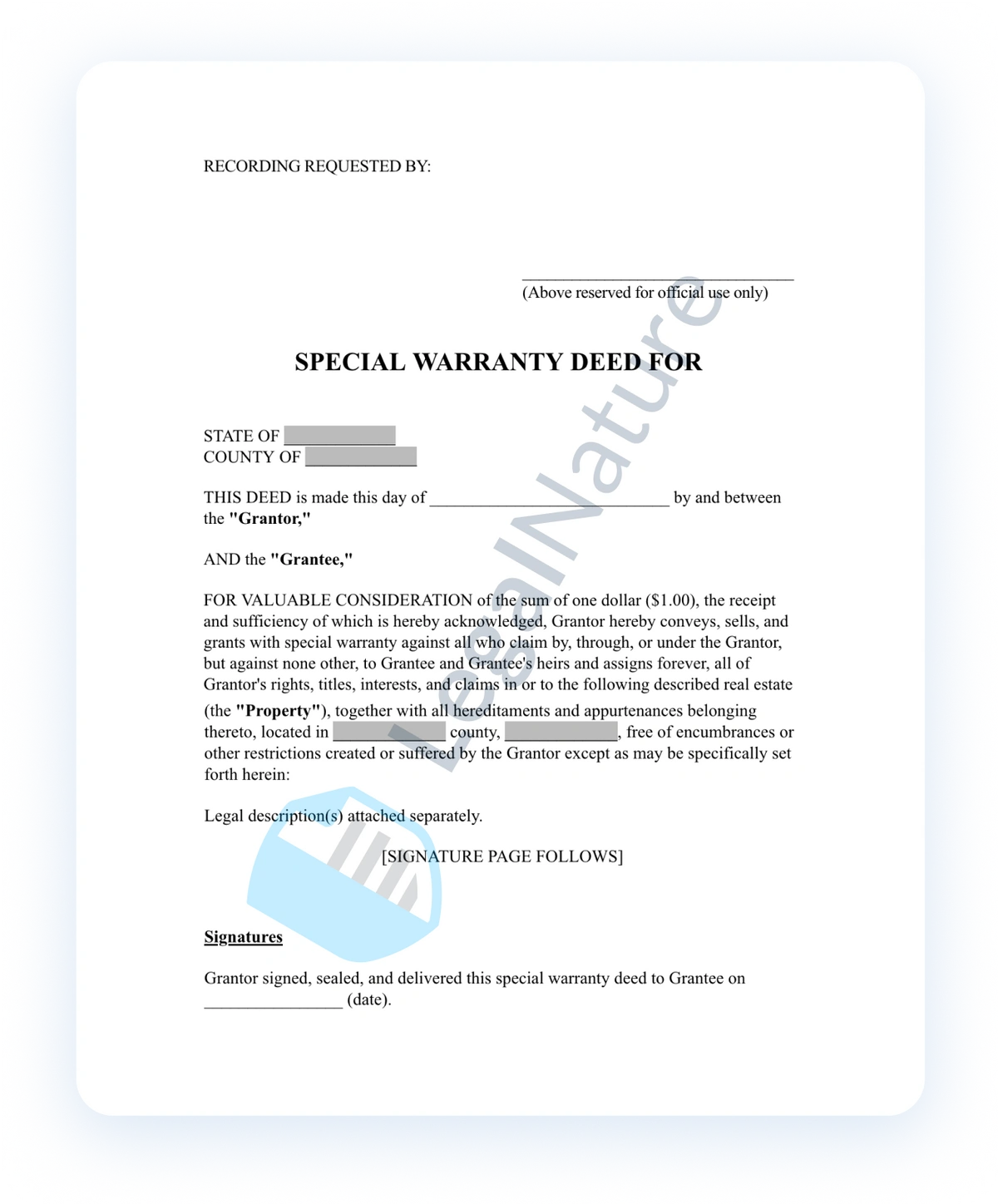
Special Warranty Deed A special warranty deed offers guarantees to the property's title only for the period during which the seller owned the property.
How Does a Quit Claim Deed Work in South Carolina?
Unlike a general warranty deed or special warranty deed, a South Carolina quit claim deed makes no promises that the grantor actually owns the property, that the title is clear of liens or encumbrances, or that no one else has a claim to it. The grantee accepts the property as-is, taking on the risk that the grantor's interest may be incomplete or invalid.
Steps to create your quit claim deed
Identify the grantor and grantee.
Confirm the legal names and current addresses of the person transferring the property (grantor) and the person receiving it (grantee).
Locate the legal description of the property.
Use the legal description from the current deed or county records rather than just the street address to avoid recording delays.
Complete the deed using LegalNature's South Carolina questionnaire.
Follow the prompts — the tool asks only for information required under South Carolina law.
Sign and notarize the deed.
Sign the deed in front of 2 witnesses and a notary public. All parties must be present at the same time.
Record the deed with the appropriate South Carolina county office.
Recording puts the transfer on the public record and protects the grantee's interest against later claims.
When Should You Use a Quit Claim Deed in South Carolina?
Quit claim deeds are most often used in non-sale situations, such as transferring property between family members, adding or removing a spouse from a title, or correcting an error on an existing deed. A quit claim deed is most useful when the parties already know and trust each other and the condition of the title.
Execution and Notarization Requirements in South Carolina
South Carolina requires the grantor's signature to be witnessed by 2 witnesses in addition to notarization. Source file describes acknowledgment in presence of 2 witnesses; flagged as needing confirmation this is mandatory, not alternative.
LegalNature's questionnaire is built to reflect South Carolina's current execution rules, but a licensed attorney can advise on your specific situation.
Marital Property Considerations in South Carolina
South Carolina is not one of the community property states, but marital property rules can still affect a transfer. If you're transferring property that both spouses own, it's a good idea to have both spouses sign.

Why choose LegalNature?
Frequently asked questions
What are the essential elements of a valid quit claim deed in South Carolina?
A valid quit claim deed must be in writing, identify the grantor and grantee, describe the property being transferred, include operative words of conveyance, and be signed by the grantor. It must then be delivered to and accepted by the grantee to take effect.
What are the main types of property deeds?
The main types of property deeds are general warranty deeds, special warranty deeds, and quit claim deeds. General warranty deeds provide the most protection for buyers, while quit claim deeds offer the least.
Does a quit claim deed need to be notarized in South Carolina?
Yes. South Carolina requires the grantor's signature to be acknowledged before a notary public before the deed can be recorded.
How does a property deed affect property taxes?
A change in ownership through a property deed can trigger a reassessment of the property's value, potentially affecting property taxes.
What is a property legal description?
A property's legal description is a detailed and precise way of identifying and locating a parcel of real estate. It serves as a unique identifier for the property, distinguishing it from all others, and often identifying the property boundaries. Legal descriptions can be found in documents such as deeds, title commitments, surveys, and property tax statements. They are also often readily available online at your county's property appraiser web page.
Does South Carolina require witnesses on a quit claim deed?
Yes. South Carolina requires 2 witnesses in addition to notarization. Source file describes acknowledgment in presence of 2 witnesses; flagged as needing confirmation this is mandatory, not alternative.
Does a quit claim deed guarantee clear title in South Carolina?
No. A quit claim deed transfers only whatever interest the grantor holds — it does not guarantee the title is free of liens, claims, or other defects. If you need title assurance, a warranty deed or title insurance policy is a better fit.
Can I use a quit claim deed to add or remove a spouse from title in South Carolina?
Yes, this is one of the most common uses for a quit claim deed in South Carolina. Both spouses signing is still good practice even where not strictly required.
Create your quit claim deed in minutes
Complete our form

Preview and download your document

Review and sign your document
