


Alabama Property Deed
Sometimes called a land deed, an Alabama property deed is a legal document used to transfer a property's title.
Select a state


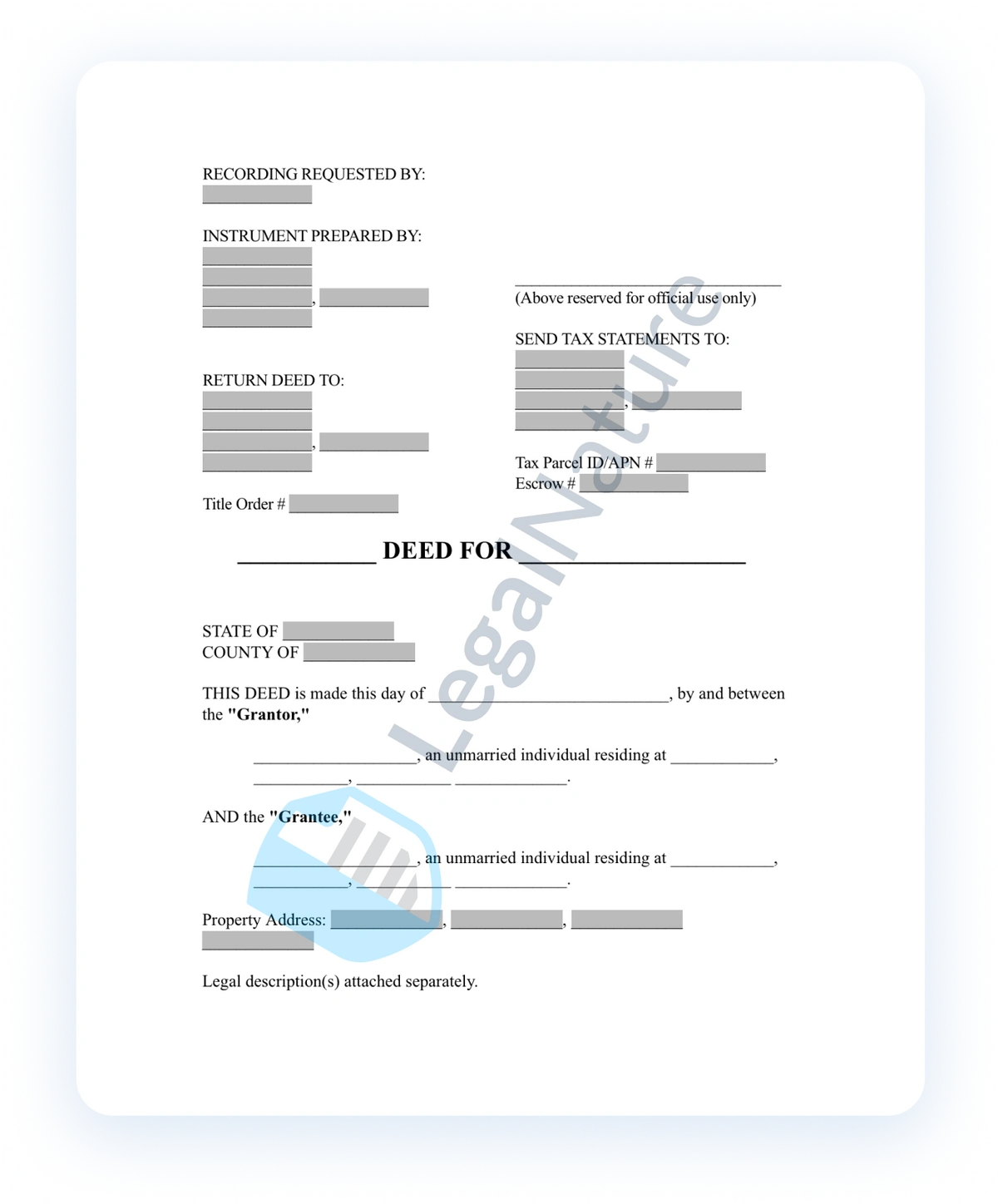
What Is a Property Deed in Alabama?
An Alabama property deed is a legal document that transfers real property from the grantor (current owner) to the grantee (new owner). To be recorded in Alabama, the deed generally must be signed by the grantor in front of one witness and a notary public. Most Alabama property deeds fall into one of the following categories:
- Quit Claim Deed: This deed type is usually used to quickly change ownership on a property title. It is common between family members and for transfers into a trust. Because quit claim deeds do not provide guarantees against title defects, they are usually the quickest and easiest solution for naming new property owners.
- General Warranty Deed: This type of deed guarantees that the grantor owns proper title to the property. It also guarantees the title is free of liens and other defects, unless the deed states otherwise. These guarantees make general warranty deeds ideal for property sales.
- Special Warranty Deed: Also known as a "limited warranty deed," this type of deed is similar to a general warranty deed. However, it does not guarantee against liens or defects that arose before the grantor owned the property.
Create the right property deed for your needs
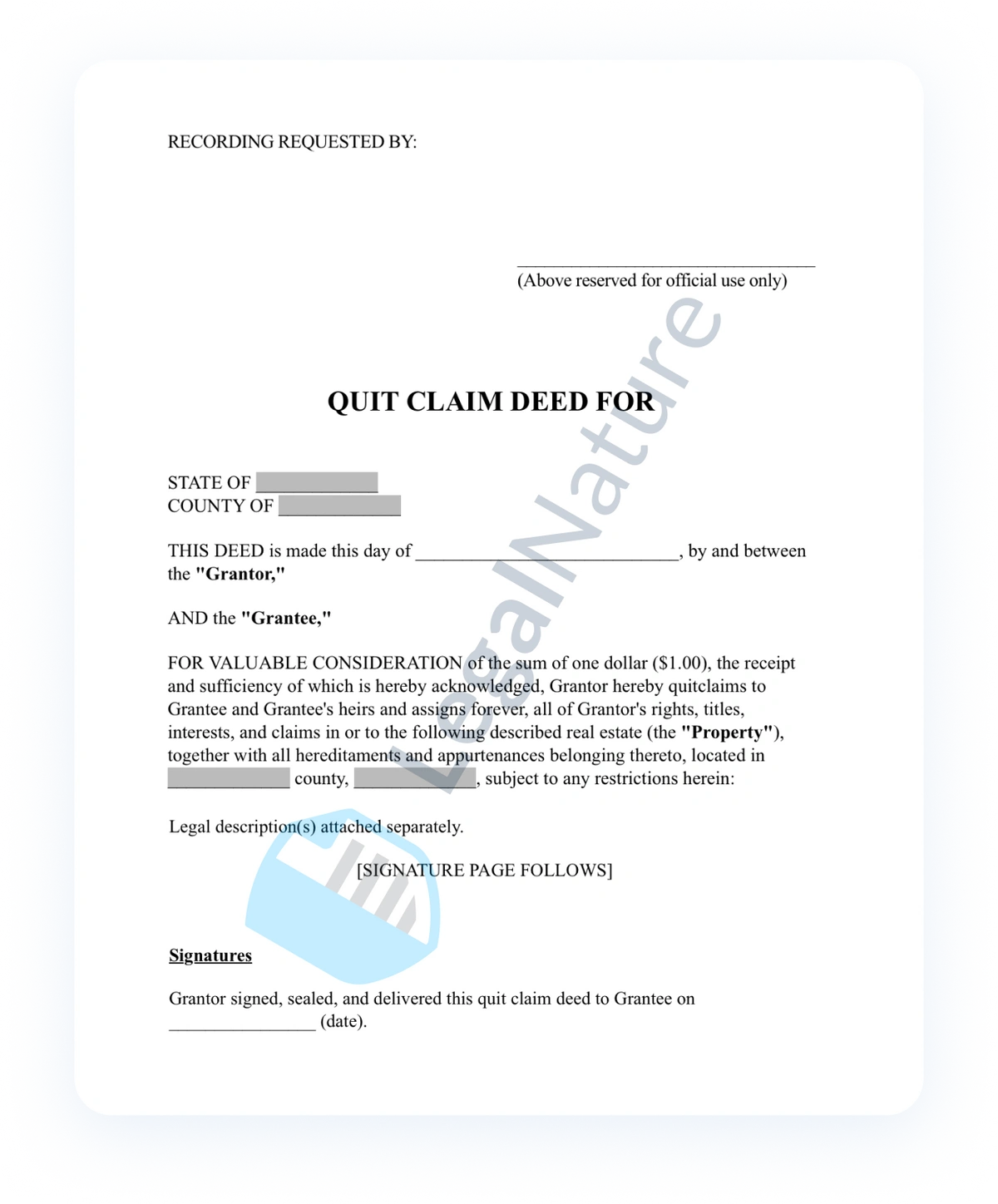
Quit Claim Deed A quit claim deed offers no warranties or assurances regarding the validity of the grantor's interest in the property, but is often the quickest and easiest way to transfer property.
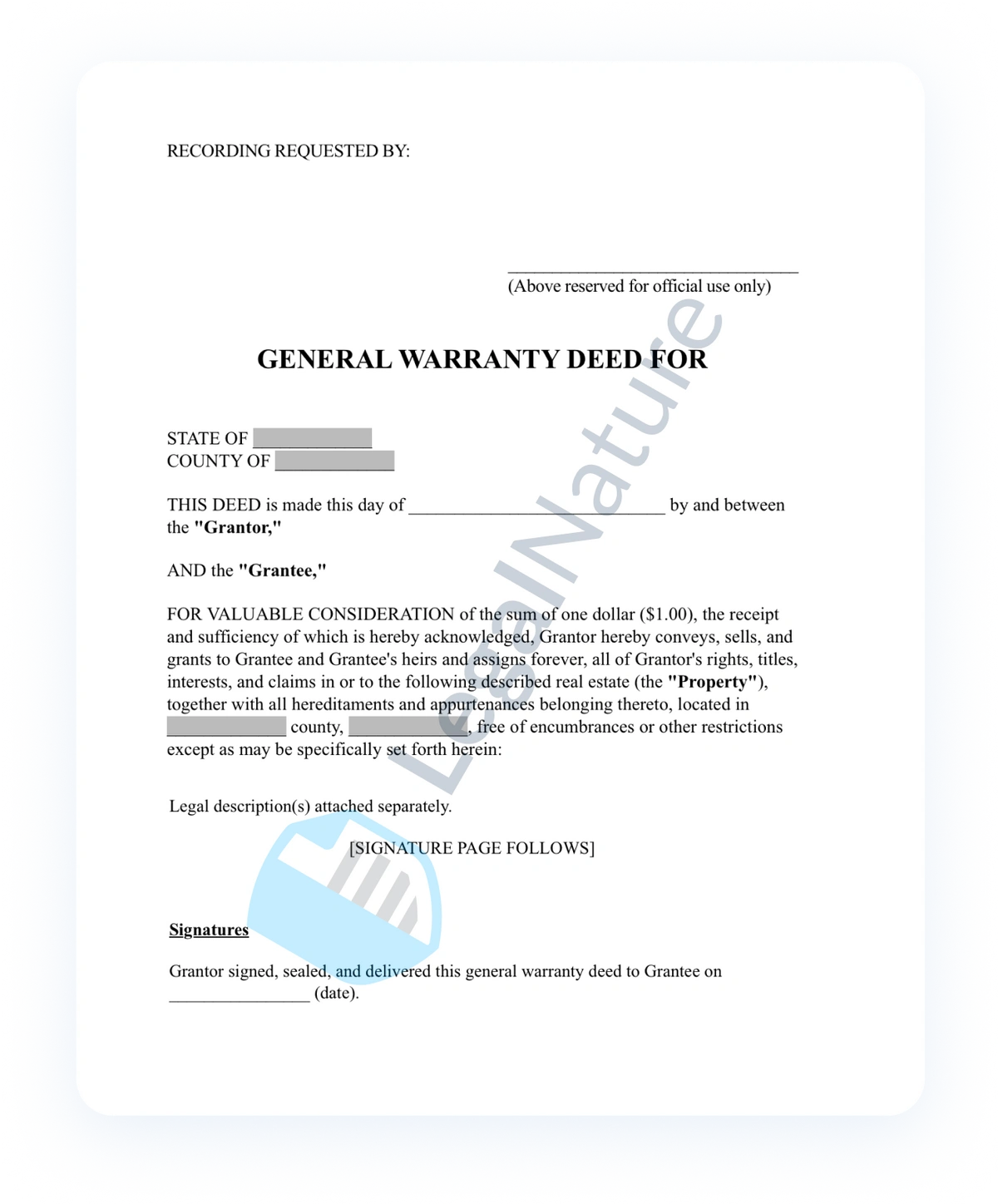
General Warranty Deed This type of deed provides comprehensive guarantees about the property's title and the seller's right to transfer it.
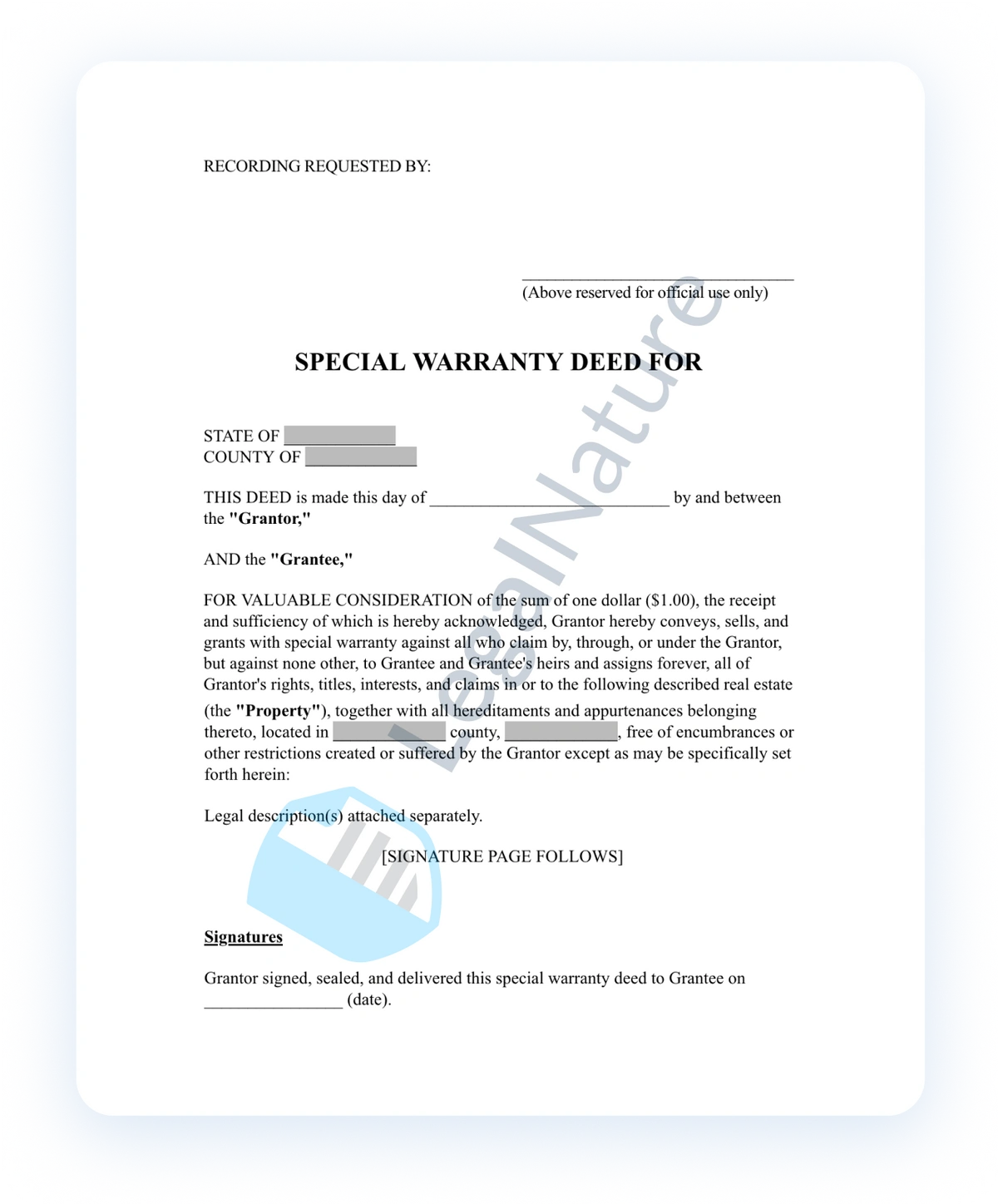
Special Warranty Deed A special warranty deed offers guarantees to the property's title only for the period during which the seller owned the property.
Steps to create your property deed
Find the Property's Legal Description
You can usually get the legal description from the local land records office, often online. It may also appear on your current deed, tax assessment information, or mortgage agreement.
Decide on a Price
In order for a contract to be enforceable, each party must give something of value. If the grantee is receiving the property for free, the deed will say the grantor received one dollar ($1.00). This is known as "nominal consideration."
Complete Our Intuitive Form Online
Answer LegalNature's Alabama-specific questionnaire to create a legally sufficient property deed that fits your needs.
Sign Your Property Deed
Sign the deed in front of one witness and a notary public. Arrange for everyone to be present at the same time. In most cases, the deed takes effect once the grantor signs it and the grantee accepts delivery.
File Your Property Deed
Although it is not always required, recording your deed is highly recommended. Recording the completed deed as soon as possible protects the grantee against potential adverse claims by other parties. You may also need to submit a Real Estate Sales Validation Form (RT-1) showing the purchase price or the property's actual value.
Why Create a Property Deed?
A property deed is the official document that transfers ownership of real estate and creates a public record of who owns it. Property deeds are created for several important reasons:
- To legally transfer ownership: A deed transfers ownership of real estate from one party (the grantor) to another (the grantee).
- To establish proof of ownership: The deed is legal evidence of who owns the property, which helps resolve ownership disputes.
- To provide legal protection: Deeds document the lawful ownership transfer and create a public record that supports title claims.
- To define property details: Deeds contain important information about the property, including its legal description, location, and any restrictions or encumbrances.
- To facilitate property transactions: Deeds are necessary for selling the property, obtaining a mortgage, or accessing certain government programs.
- To ensure clear title: Some types of deeds, like warranty deeds, provide guarantees that the buyer receives the property free from undisclosed liens or claims.
- To create a public record: Recording the deed with the local government creates an official public record of the property's ownership history.
Signing and Recording Requirements in Alabama
Alabama requires the grantor to sign the deed in front of one witness and a notary public (Ala. Code § 35-4-20). Once the deed is signed, record it with the local land records office where the property is located. Keep these Alabama requirements in mind before you file:
- Formatting rules such as margins and cover pages can vary by recording office, so check local requirements before you file.
- Include a statement showing the name and address of the person who prepared the deed (Ala. Code §§ 35-4-110, 35-4-113).
- Do not staple the pages of your deed together, and keep all signatures original rather than copied, printed, or stamped.

Why choose LegalNature?
Frequently asked questions
What are the essential elements of a valid property deed?
A valid property deed must be in writing, identify the parties involved, describe the property being transferred, include operative words of conveyance, be signed by the grantor, and be delivered and accepted by the grantee.
What are the main types of property deeds?
The main types of property deeds are general warranty deeds, special warranty deeds, and quit claim deeds. General warranty deeds provide the most protection for buyers, while quit claim deeds offer the least.
Does a property deed need to be notarized in Alabama?
Yes. Alabama requires both notarization and one witness when the grantor signs the deed. Missing a witness signature can keep the deed from being recorded, so confirm everyone is present before signing.
How does a property deed affect property taxes?
A change in ownership through a property deed can trigger a reassessment of the property's value, potentially affecting property taxes.
How do I record a property deed in Alabama?
Record your Alabama deed with the local land records office where the property is located. Submit a Real Estate Sales Validation Form (RT-1) showing the purchase price or the property's actual value. Include a statement showing the name and address of the person who prepared the deed. Local recording requirements can also vary, so confirm them with the recording office before you file.
Create your property deed in minutes
Complete our form

Preview and download your document

Review and sign your document
